
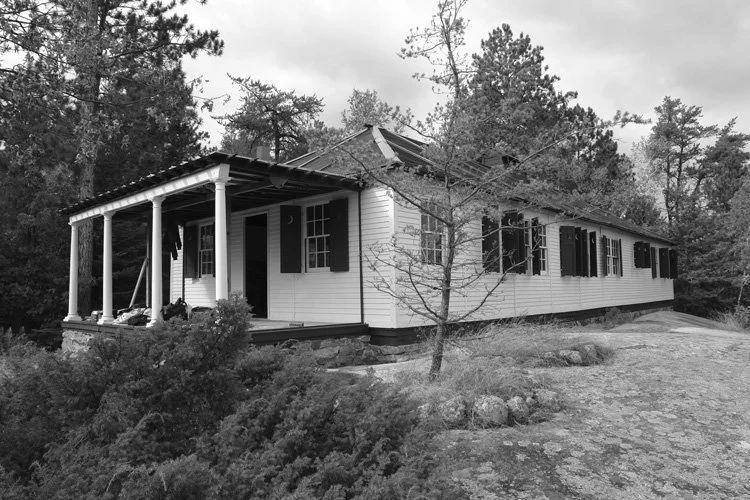
Main Cabin
A retreat on Sand Point Lake: The Ingersoll Estate
Tucked among the rocky shorelines and bays of Sand Point Lake lies Ingersoll Island, a place where the history of northern Minnesota’s wilderness meets the personal story of one man’s search for escape, comfort, and connection to nature. In 1927, William P. Ingersoll, a wealthy philanthropist from Canton, Illinois, purchased a small piece of land on Sand Point Lake. What began as a modest cabin getaway quickly expanded as Ingersoll’s admiration for the region deepened.
Over the years, the simple retreat grew into a self-sufficient compound of multiple buildings, an early example of the broader cultural shift in the early 20th century, when Americans with means increasingly sought out wilderness destinations for recreation and rejuvenation. By the time Ingersoll sold the property in 1962, he was in his seventies, and the estate had become a lively summer gathering place for his friends and family.
In the decades surrounding the establishment of Voyageurs National Park, many privately owned cabins, resorts, and homes across the region were sold, vacated, or transferred to federal ownership, reshaping the landscape into the protected park we know today. The Ingersoll Estate, with its unique collection of structures and thoughtful design, stood out as a particularly rich example of this era. In 2011, the National Park Service listed the estate on the National Register of Historic Places for its local significance in architecture and recreation.
The estate was officially categorized as a historic district with six contributing properties. These included the 1928 main cabin, Ingersoll’s original retreat, which collapsed in 2014 due to age, structural weakness, and years of harsh northern weather. Its remains were removed rather than rebuilt. The second property is a prefabricated six-room cabin constructed for Robert B. Chiperfield, a longtime U.S. congressman from Canton and one of Ingersoll’s closest friends and frequent guests. Also included are a circa-1952 generator shed, a boathouse, and a workshop and storage building with additions for an icehouse, sauna, and fish cleaning station. The sixth contributing feature is the cultural landscape itself: the garden beds, stone footpaths, fencing, bird house, and the intentional placement of buildings to preserve privacy and broaden views of the lake.
Today, four of the original structures remain on Ingersoll Island, offering a meaningful reminder of the region’s past. Together, these structures speak to a time in which frontier land turned into wilderness escape for families.
Check out the full list of our 50 legacies!
This year, we’re celebrating 50 years of Voyageurs National Park by sharing 50 inspiring stories of the people who shaped its legacy. Years, 50 Legacies is a yearlong storytelling series highlighting individuals whose lives are woven into the fabric of the park – whether through conservation work, cultural traditions, recreation, research, or personal connection.
Raise a canteen and celebrate this historic milestone with us at our 50th anniversary website. Don't forget to subscribe to our newsletter for more inspiring stories and updates!
