
December 2025 Night Sky Explorer by Bob King
Orion leads the way as the bright winter stars flood the eastern sky. Joining him are Aldebaran, Pollux, Procyon, Sirius and mighty Jupiter. Saturn slides into the southwestern sky, while Mercury makes a bright appearance at dawn during the first half of the month. Mars and Venus are out of commission, too close to the sun and lost in its glare.
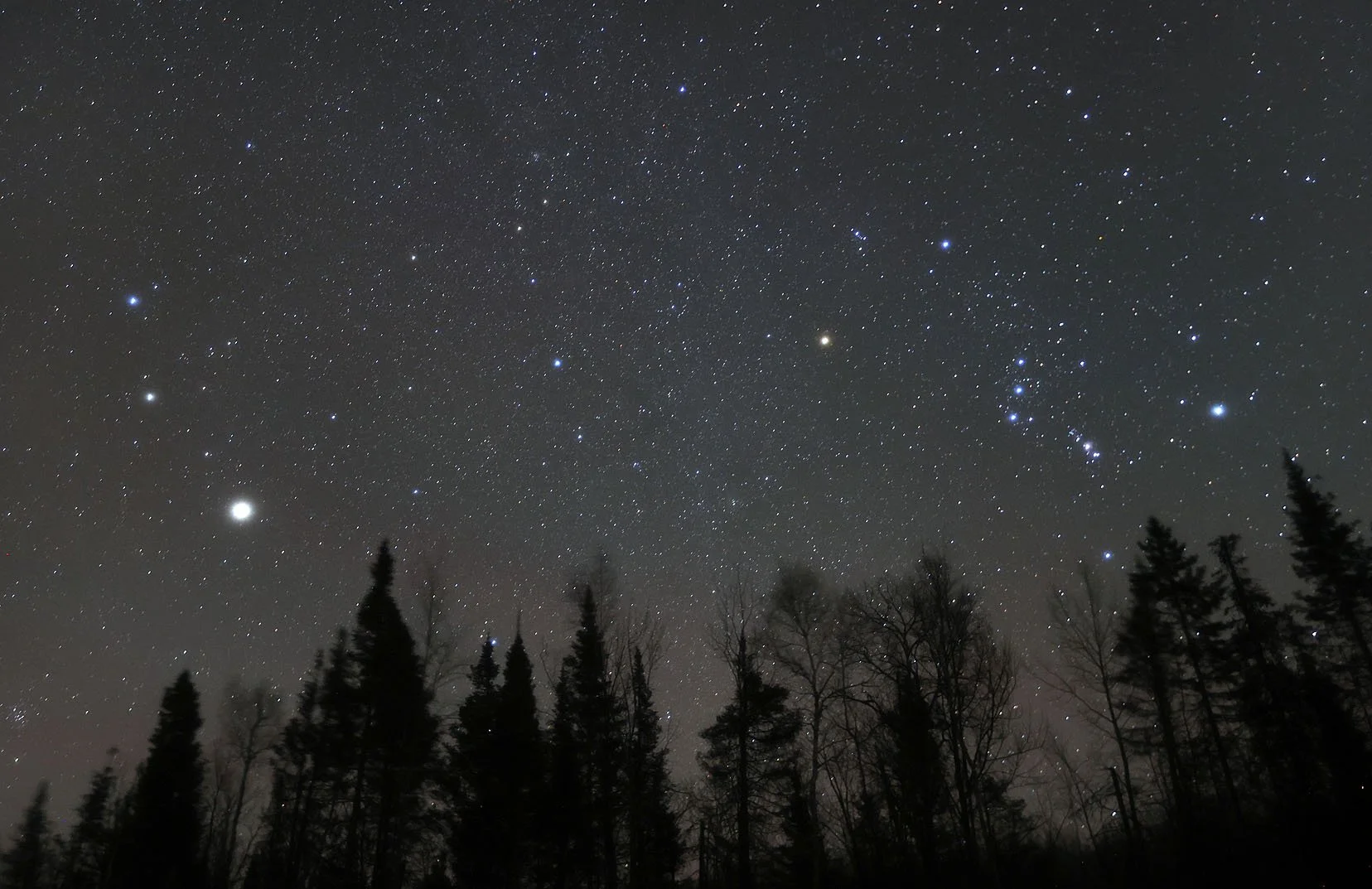
The month’s biggest event is the annual Geminid meteor shower, which occurs in a dark, nearly moonless sky the night of December 13-14. Bundle up and spend an hour or two watching fragments shed by the asteroid Phaethon strike the atmosphere and incinerate in a flash. Wows await!
We also have two fine opportunities to see the star Algol in the constellation Perseus the hero undergoes a stellar eclipse. These occur every 2.9 days when Algol B, its larger but dimmer companion star, passes in front of Algol A. The drop in brightness is more than a magnitude (about 70%) and obvious to the eye.
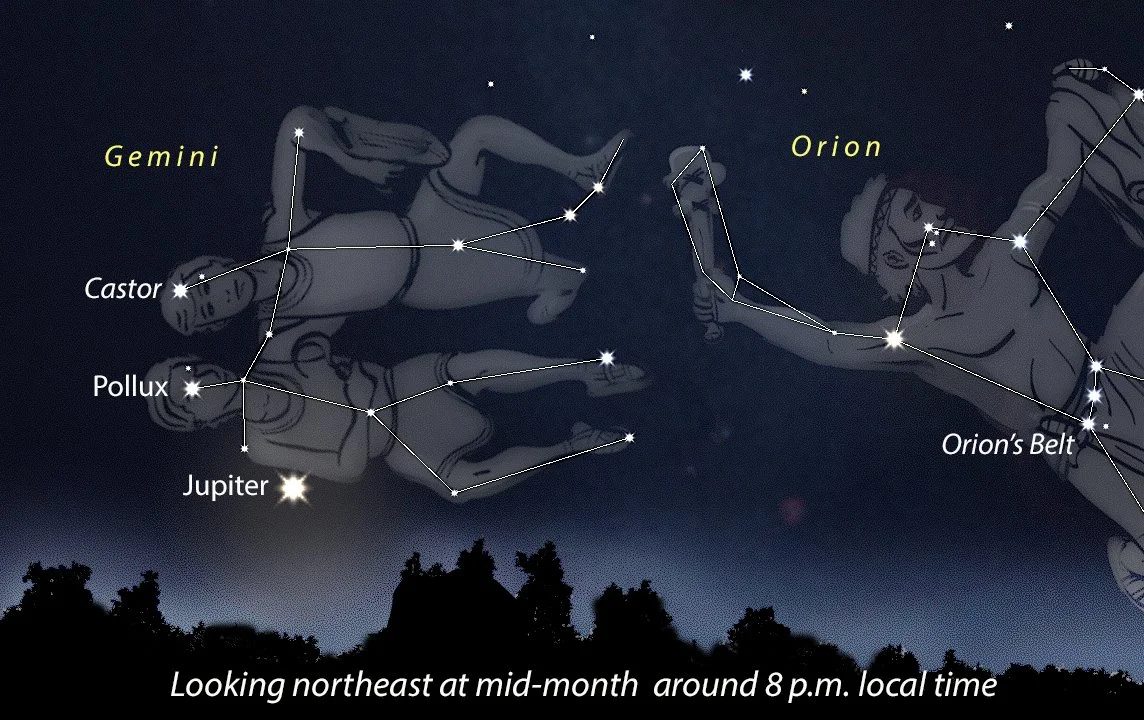
Our featured constellation is Gemini, which also happens to be Jupiter’s temporary home. Gemini is visible in the eastern sky around 8 p.m. local time. Its two brightest stars, Pollux and Castor, shine to the upper left of Jupiter. They represent the mythical Greek identical twins Kastor and Polydeukes. The pair was strongly connected, understood one another and even dressed alike as some twins do to this day. But they were different in one key way – Pollux was immortal because Zeus was his father, and Castor was mortal because his dad was the king of Sparta. I know, it’s a long story.
Castor became a famous boxer and his brother a respected horseman and warrior. They joined the crew of Jason and the Argonauts on the ship Argo in search of the Golden Fleece, a magical ram with hair of gold. While the brothers used their skills to ensure the expedition’s success, a disagreement broke out with another set of twins over women. This led to a fight and the death of Castor. Pollux was so heartbroken he asked Zeus to grant his mortal brother immortality so they could be together forever. Zeus placed them in the sky as Gemini, where they remain inseparable to this day.
Download the free Stellarium Mobile app for Android and iPhone to help you find and identify the current planets and constellations. Do a Google search, then install the app, set it in night mode (red screen) and point your phone skyward. For a free December sky map and calendar go to www.skymaps.com/downloads.html. For updates, aurora alerts and news, check out my Facebook at https://www.facebook.com/astrobobking.
Events (a.m. indicates the event happens in the morning sky)
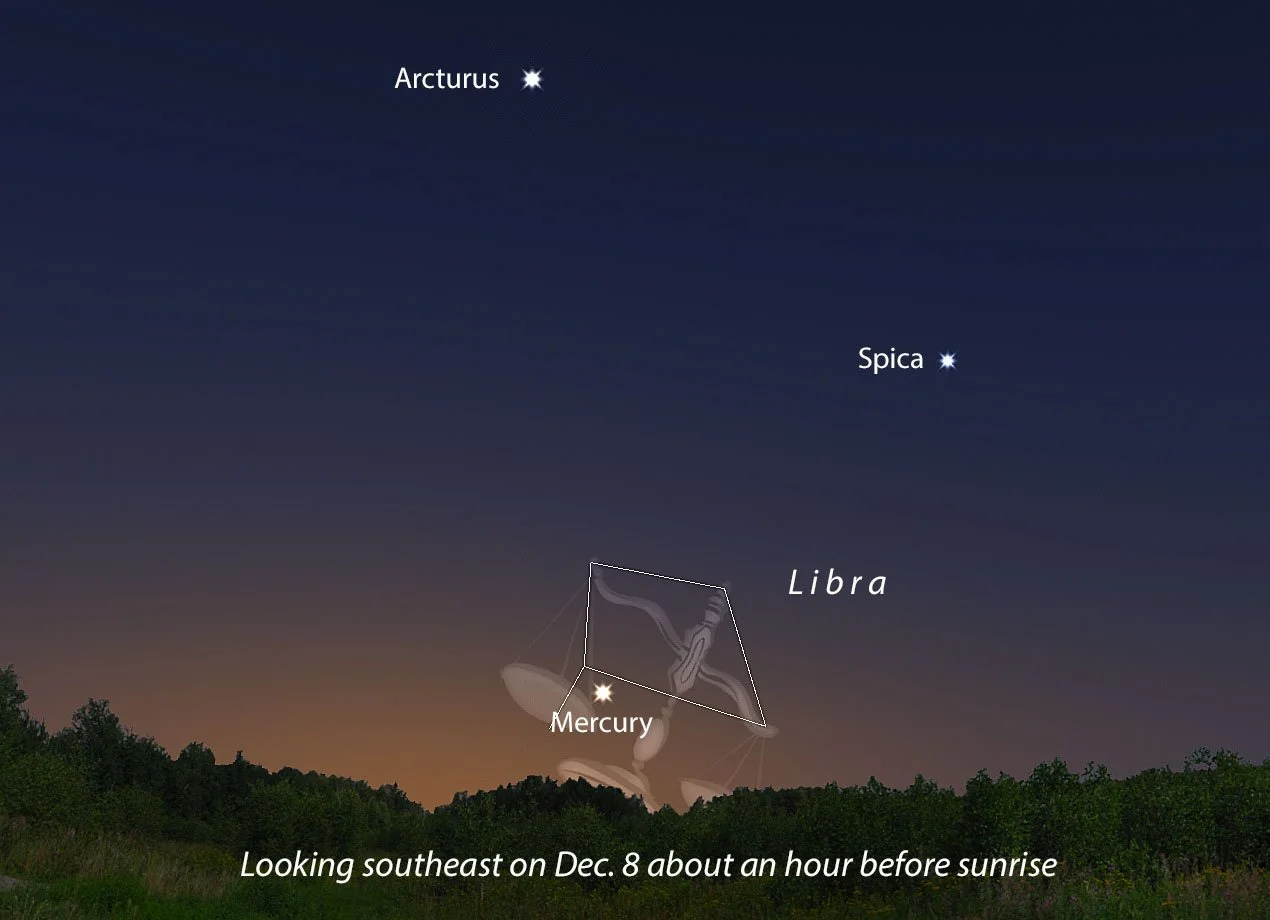
Dec. 1-20 (a.m.) – Mercury puts in a good morning appearance. Look for the speedy planet an hour to 45 minutes before sunrise low in the southeastern sky during this time. Brightest and easiest to see between the 5th and 10th.
Dec. 3 – The nearly full moon hides members of the Seven Sisters (Pleiades) star cluster between about 7 and 9 p.m. CST. You’ll need binoculars or a small telescope to see it because of glare from the bright moon.
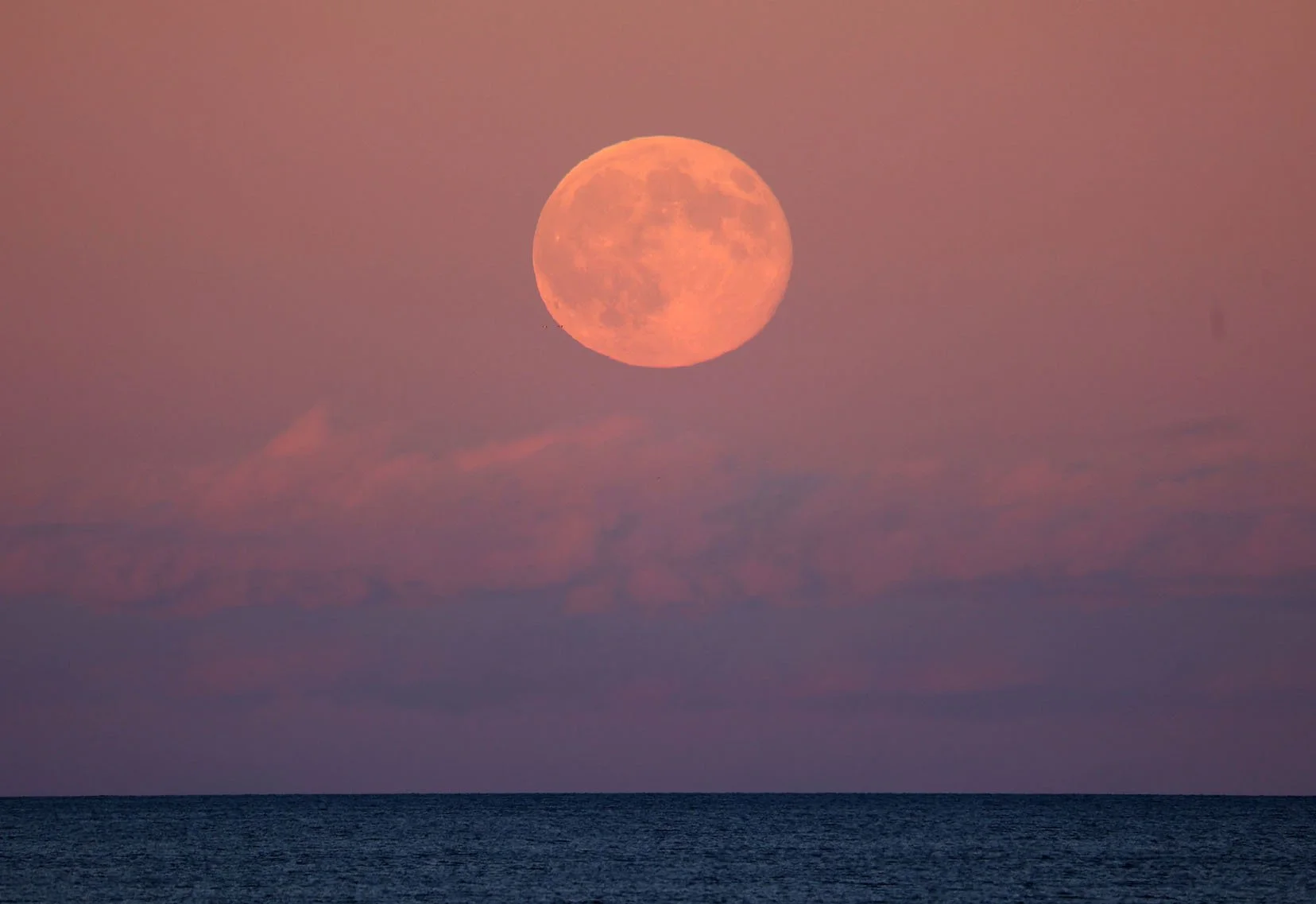
Dec. 4 – Full Cold Moon. Rises around local sunset and sets the next morning around sunrise.
Dec. 6 – Waning moon shines above Jupiter in the eastern sky this evening.
Dec. 9 (a.m.)– Waning moon passes very close to Leo’s brightest star, Regulus. Look for it immediately below the southern edge of the moon in binoculars. From locations in and northern Canada, the moon will cover the star temporarily, an event called an occultation.
Dec. 11 (a.m.) – Last quarter moon. The half-moon stands high in the south around the time of sunrise.
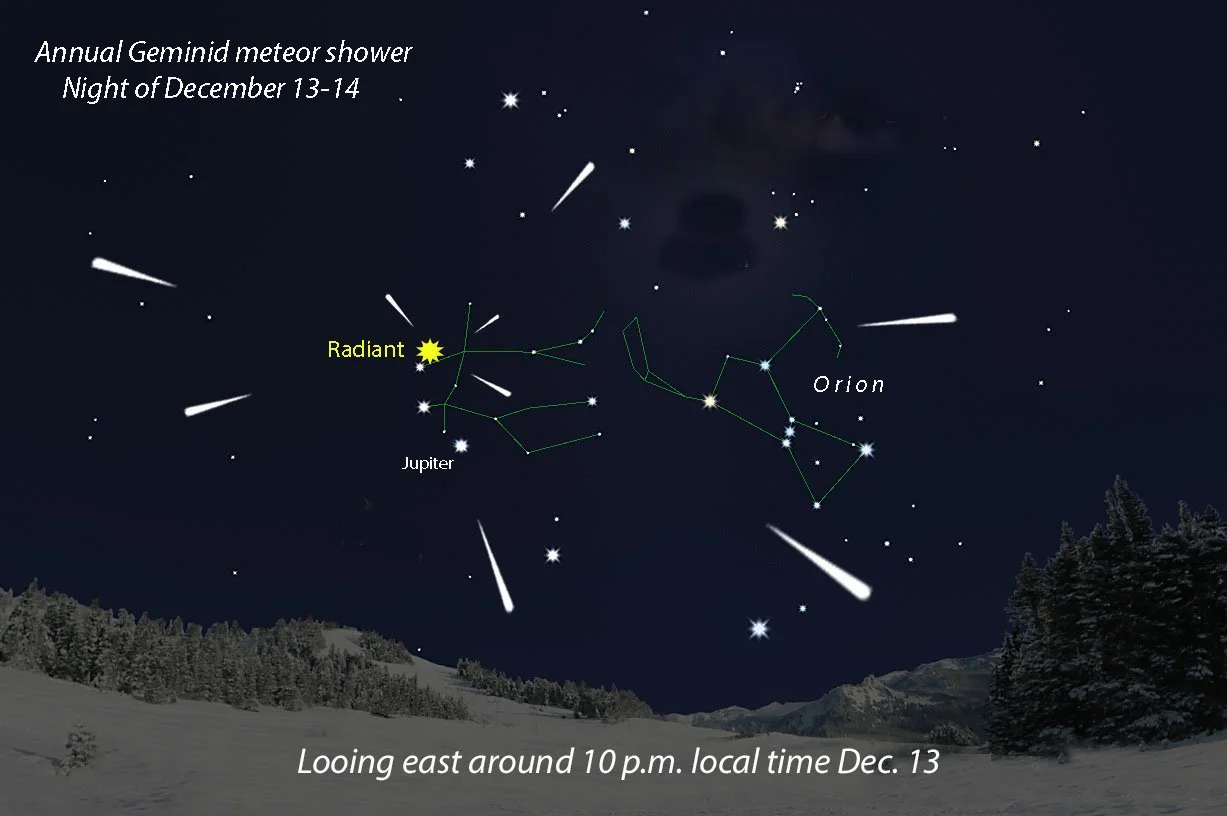
Dec. 13-14 – Peak of the annual Geminid meteor shower, the strongest of the year. You start as early as 9:30 p.m. local time, but the number of meteors increases the later you stay up. The moon won’t interfere, so this should be 2025’s best shower by far. Up to 80+ meteors per hour when viewed from a rural sky. Meteor stream from the radiant in Gemini but will appear all over the sky. Face your darkest direction for the best view.
Dec. 14 (a.m.) – Waning crescent moon shines just to the right of Spica, Virgo’s brightest star.
Dec. 15-31 (a.m.) – The International Space Station arcs across the early morning sky. For a complete list of flyovers for your city, log in to Heavens-Above.com, select your location and then click the blue ISS link. Or download and install NASA’s Spot the Station app at the app store or Google Play.
Dec. 17 (a.m.) – Find Mercury about one balled fist held at arm’s length to the left of the very thin crescent low in the southeastern sky 45 minutes to an hour before sunrise. Bring binoculars just in case!
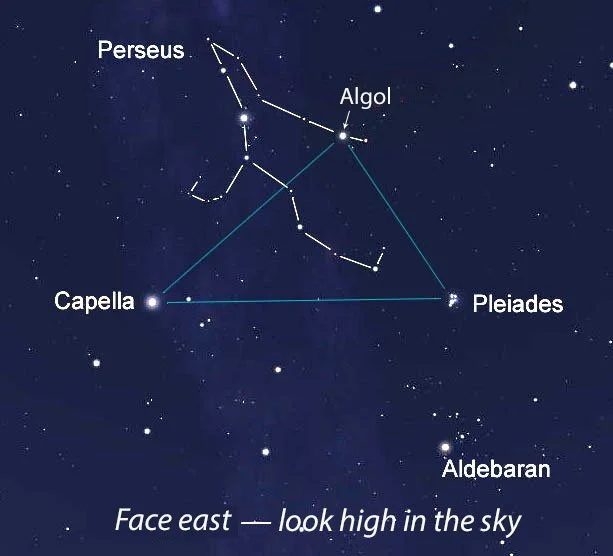
Dec. 17 – Algol the Demon Star at minimum brightness around 9:30 p.m. CST. You can watch it fade to minimum brightness if you spot the star as soon as it gets dark, then look again around 9:30. Use the map to locate Algol. When brightest it almost equals Almach. At minimum it’s similar to Kappa Persei.
Dec. 19 – New Moon. The moon lies in the same direction as the sun and not visible because it’s in the daytime sky.
Dec. 20 – Algol at minimum brightness around 6:15 p.m. CST. Look early, then watch it slowly rise to peak brightness later this night.
Dec. 21 – Winter solstice. Shortest day and longest night of the year. The sun also shines lowest (farthest south) in the sky. This evening, look for the splendidly thin moon low in the southwestern sky 30-45 minutes after local sunset.
Dec. 21 – The annual Ursid meteor shower peaks on the night of December 21-22. They stream from the Little Dipper at the rate of 5-10 per hour.
Dec. 26 – Thick crescent moon shines directly above Saturn.
Dec. 27 – First quarter moon. The half-moon stands approximately due south around sunset and sets around midnight.
Visit my Astro Bob page on Facebook at www.facebook.com/astrobobking for updated astronomy news, aurora forecasts, and the latest comet maps.
Clear skies! --- Bob
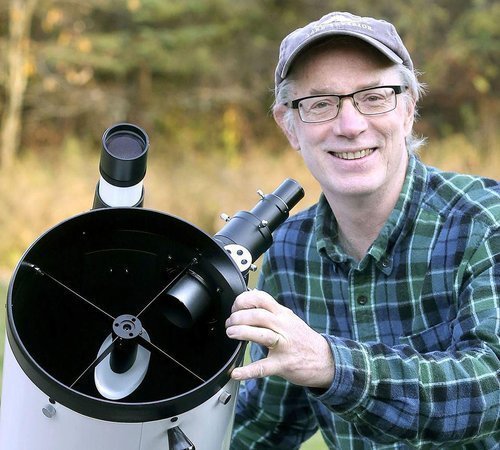
Bob King is an amateur astronomer, author, and passionate educator. He served as a photographer and photo editor at the Duluth News Tribune for 39 years and taught at the UMD planetarium. Bob’s work had a great impact on Voyageurs National Park. To achieve International Dark Sky Park certification, the park was required to host dark sky education events. Through the Night Sky Explorer webinars, the Conservancy was able to fulfill this component and help secure the certification for Voyageurs National Park. We can’t thank Bob King enough for sharing his talents and knowledge with the Conservancy community to support dark sky preservation.
