
By Bob King
November marks the transition between pleasant fall temperatures and the first bite of winter cold. Remember to slip a few handwarmers in your pocket before heading out to stargaze. The dipper-shaped Pleiades cluster shines in the eastern sky around 8 o’clock. Orion and his winter cohorts follow around 10.
Saturn, the sole bright evening planet for weeks, finally has company. Starting around Nov. 5 it’s joined by Jupiter and Mars, which rise before midnight in the northeastern sky. Venus, lost in the solar glare for a month, returns at dawn low in the southeastern sky. Even a small telescope will show it as a tiny crescent “moon”.
Celestial highlights include a delightful series of conjunctions and close approaches of Mars, Jupiter and the waning moon in the morning sky. Both planets brighten steadily and are guaranteed to get your attention if you’re up late.
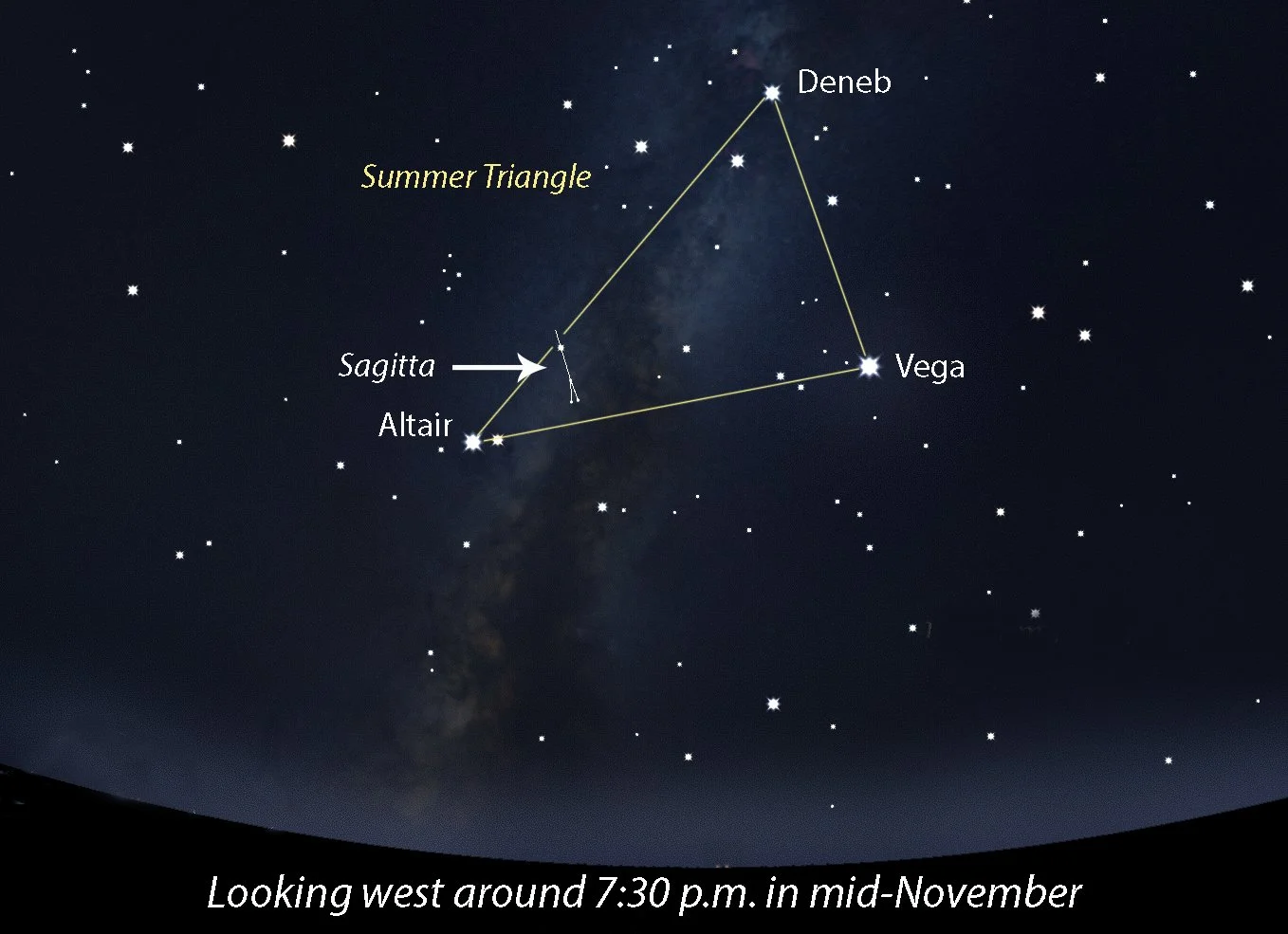
Our featured star group is Sagitta the Arrow, third smallest of the 88 constellations. It’s located in the bottom of the Summer Triangle just above the bright star Altair. Sagitta has no particularly bright stars, but its compact shape and having Altair nearby make it easy to find.
In one telling, the Greek god of the sun, Apollo, killed the Cyclops with the arrow in revenge for his son Asclepius’ death. The one-eyed beast had forged the thunderbolt that Zeus used to kill him. Asclepius was a great healer. Hades, god of the underworld, complained to Zeus that thanks to the healer’s skills he was losing customers, so the big guy did him a solid.
Download the free Stellarium Mobile app for Android and iPhone to help you find and identify the current planets and constellations. After you install the app set it to night-mode (red screen) and point your phone skyward.
For a free November 2026 sky map and calendar go to www.skymaps.com/downloads.html. For updates, aurora alerts and news, check out my Facebook at https://www.facebook.com/astrobobking.
Events (a.m. indicates the event happens in the morning sky. All times are Central Standard.)
Nov. 1 (a.m.) – Daylight Saving Time ends. Last quarter moon rises around midnight and shines in the south at dawn.
Nov. 1 – China’s Tiangong space station returns to making evening passes across the southern sky. For a complete list of flyovers for your city, log in to Heavens-Above.com, select your location and then click the blue Tianhe-1 link. The station looks like a bright star moving from west to east.
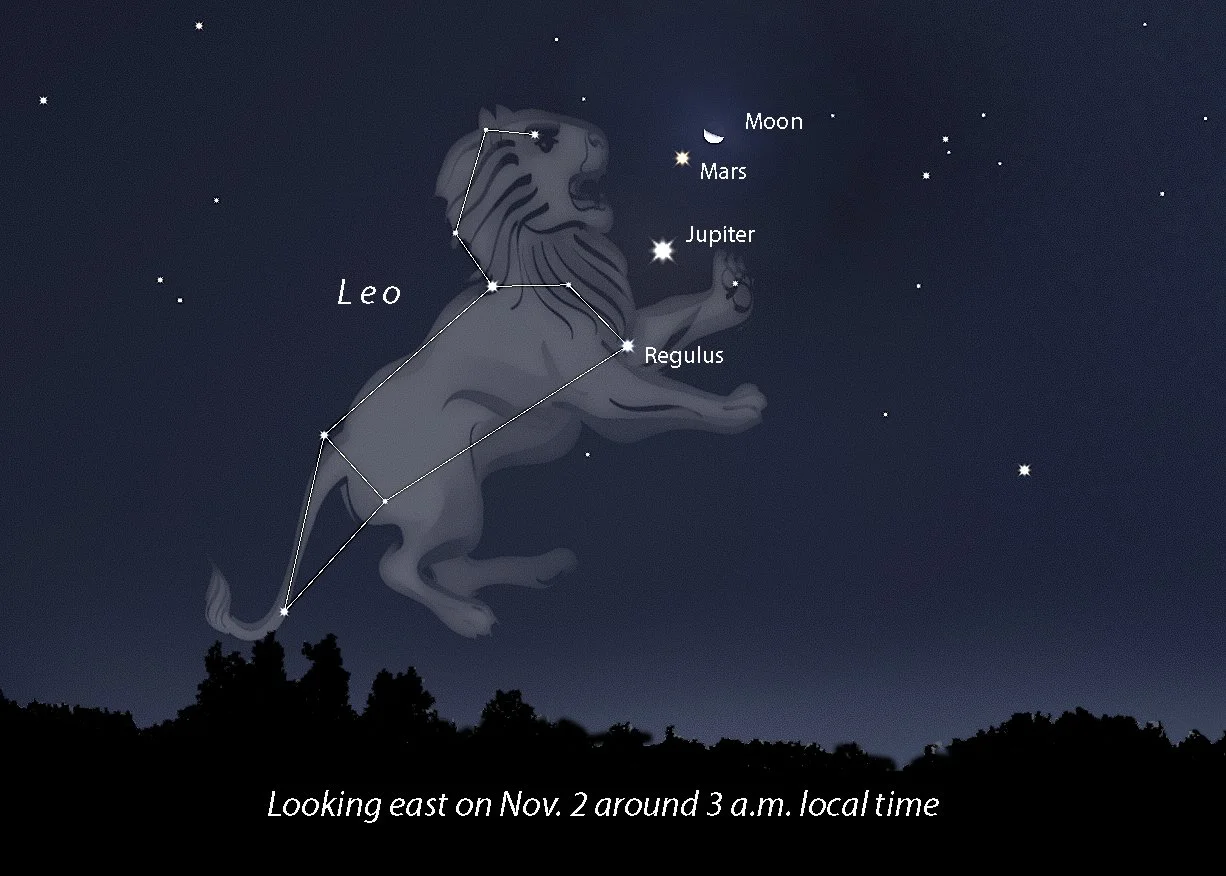
Nov. 2 (a.m.) – Waning moon, Mars, Jupiter and the bright star Regulus cluster together in the morning sky. Best views from 2 a.m. till dawn. Look east.
Nov. 3 (a.m.) – Moon passes just two moon-diameters (1 degree) below Regulus in the wee hours before dawn.
Nov. 5-12 – Peak of the annual Taurid meteor streams. The showers are sparse but produce bright fireballs. Meteors stream from the direction of the Pleiades cluster (Seven Sisters) in the eastern sky. Visible from 9 p.m. till dawn.
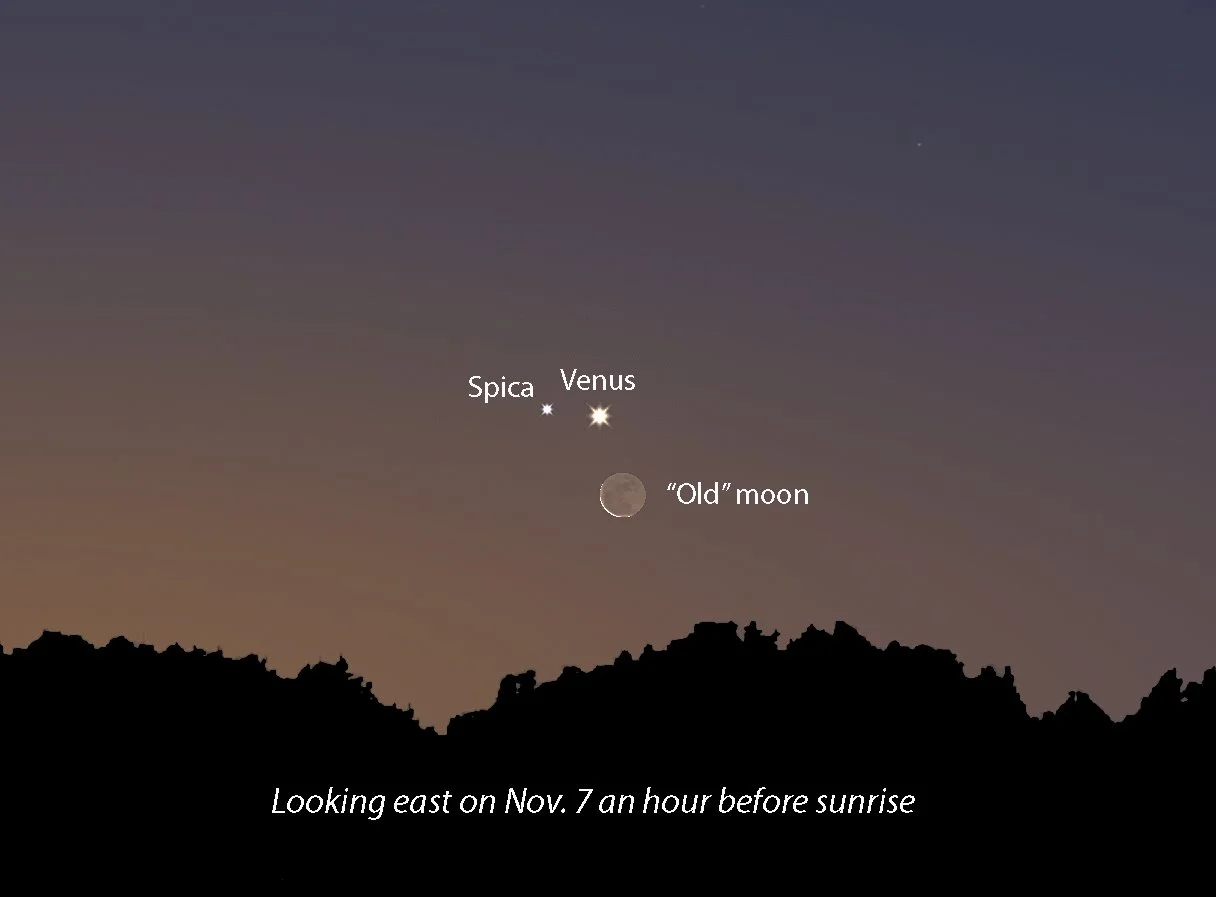
Nov. 7 (a.m.) – Venus returns to the morning sky. A thin lunar crescent shines just below the planet low in the southeastern sky about an hour before sunrise.
Nov. 9 – New moon. Moon near the sun in the daytime sky and not visible.
Nov. 10-30 – The International Space Station makes 1-2 passes each evening around dusk. For a complete list of flyovers for your city, log in to Heavens-Above.com, select your location and then click the blue ISS link. Or download and install NASA’s Spot the Station app at the app store or Google Play. The ISS looks like a brilliant star moving west to east across the sky.
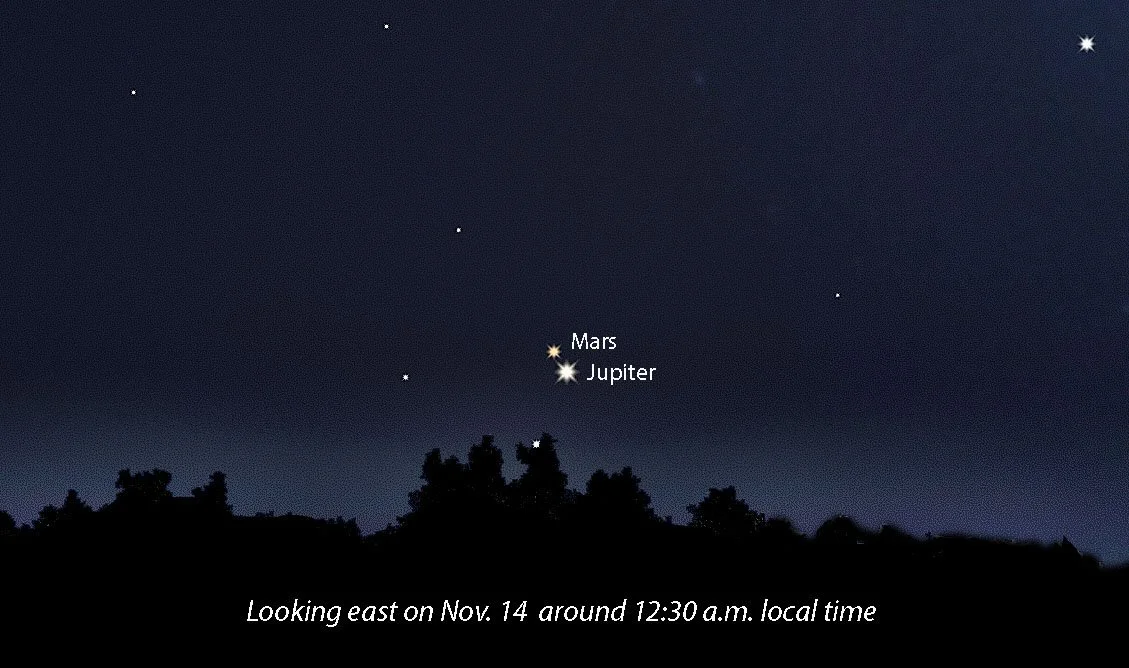
Nov. 14 (a.m.) – Dazzling conjunction of Mars and Jupiter in Leo visible from 1 a.m. until dawn. The duo looks like a bright, colorful “double star” in the eastern sky.
Nov. 17 – First quarter moon shines low in the south at sunset.
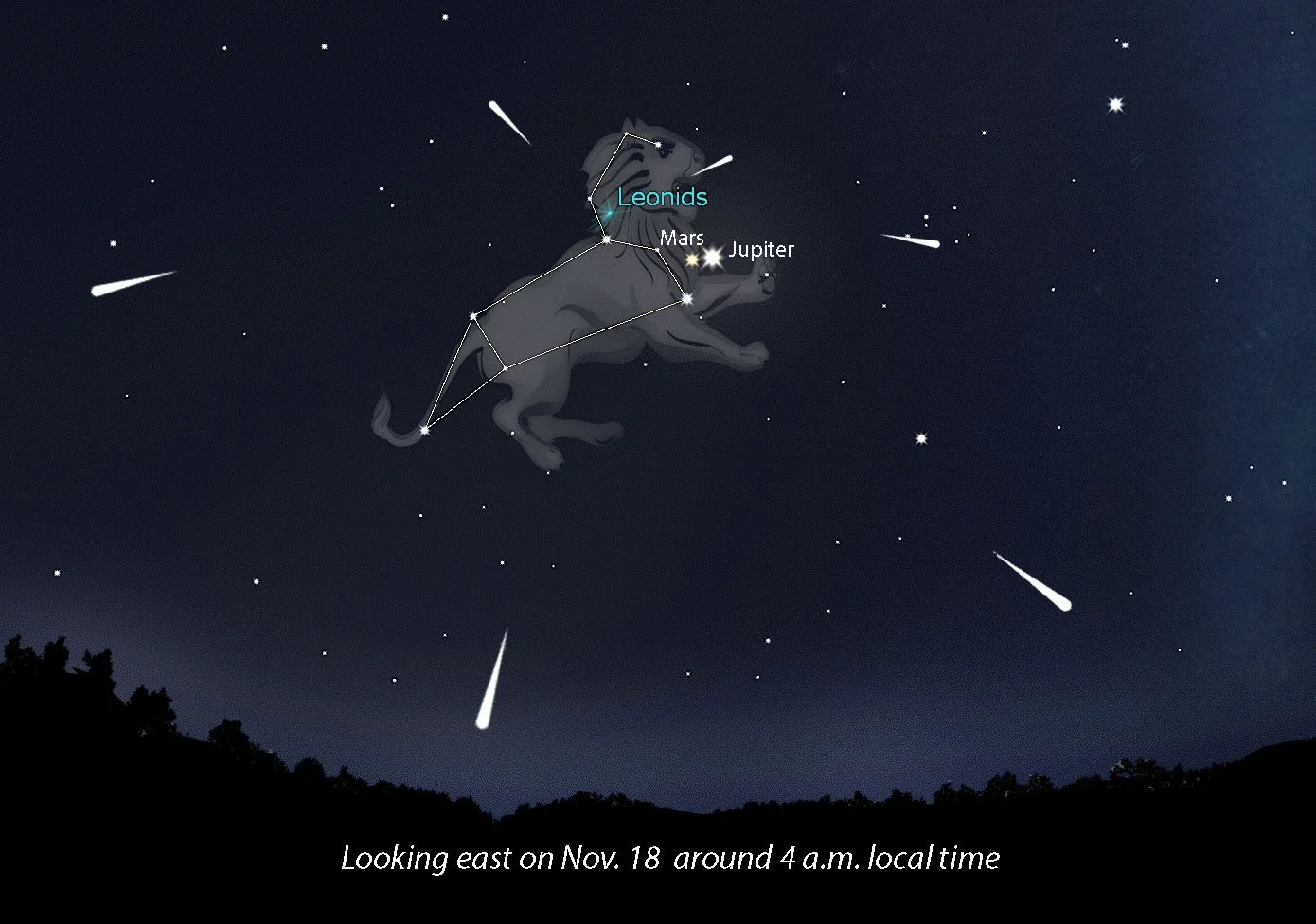
Nov. 18 (a.m.) – Peak of the annual Leonid meteor shower. Speedy Leonids stream from the head of Leo the Lion from 2 a.m. till dawn. This is a fairly weak shower with 10-15 meteors per hour expected. No moon will mar the view.
Nov. 20 – Waxing gibbous moon shines above Saturn tonight.

Nov. 24 – Full Beaver Moon. Beavers finish building their lodges and beaver trapping season gets underway. Go to https://www.timeanddate.com/moon/ to find your local moonrise time. On Nov. 25 from 1 a.m. till dawn, Jupiter, Mars and Regulus gather in a compact right triangle in the eastern sky.
Nov. 25 – Uranus at opposition, when it’s brightest and closest for the year. Close means 1.7 billion miles from Earth – far but still bright enough to spot in binoculars if you know just where to look. I’ll post a finder map on my Facebook later this month.
Nov. 30 (a.m.) – Spectacular conjunction of the waning gibbous moon and Jupiter in the eastern sky from around 12:30 a.m. till dawn. Mars and Regulus shine nearby to the east.
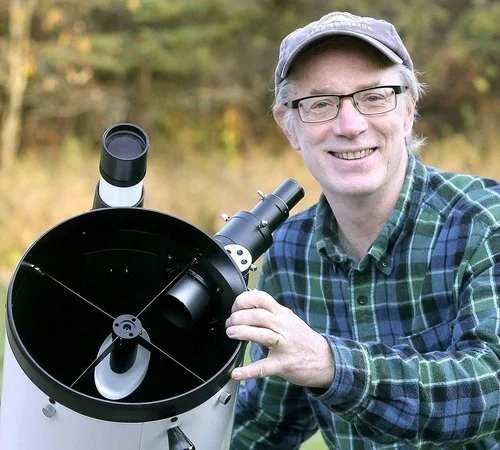
Bob King is an amateur astronomer, author, and passionate educator. He served as a photographer and photo editor at the Duluth News Tribune for 39 years and taught at the UMD planetarium. Bob’s work had a great impact on Voyageurs National Park. To achieve International Dark Sky Park certification, the park was required to host dark sky education events. Through the Night Sky Explorer webinars, the Conservancy was able to fulfill this component and help secure the certification for Voyageurs National Park. We can’t thank Bob King enough for sharing his talents and knowledge with the Conservancy community to support dark sky preservation.