
When the Night Sky Becomes a Classroom: Writing, Wonder, and Light Pollution
Shared by Wendy Back, Elementary Library Media Specialist in Mt. Sterling Kentucky.
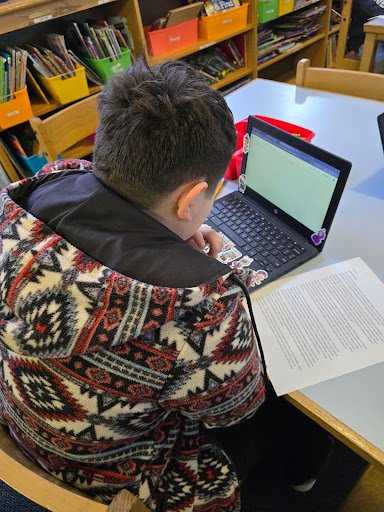
Have you ever talked to your students about the night sky? It’s funny — we spend so much time teaching about the solar system, yet most of our kids only see it through diagrams and digital models. By the time the real sky puts on its nightly show, they’re usually at home, indoors, surrounded by the glow of streetlights and screens. Sometimes I catch myself wondering if my lessons can ever compete with that.
This year, though, something clicked.
With state testing on the horizon, I was asked to incorporate a writing assignment into my 4th and 5th grade library classes. Instead of reaching for the usual prompts, I decided to use the Boreal Stargazing Week Prerecorded Video 2026as our launchpad. The visual comparisons in that video — bright sky vs. dark sky, star‑filled vs. star‑washed — were exactly what my students needed to understand light pollution in a real way.
After watching, we talked about what they noticed, what surprised them, and why the night sky looks so different depending on where you stand. Then I wrote two articles — one for 4th grade and one for 5th — using the information from the video (below).
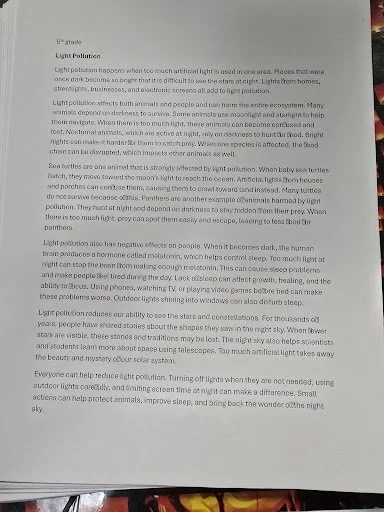
5th grade article
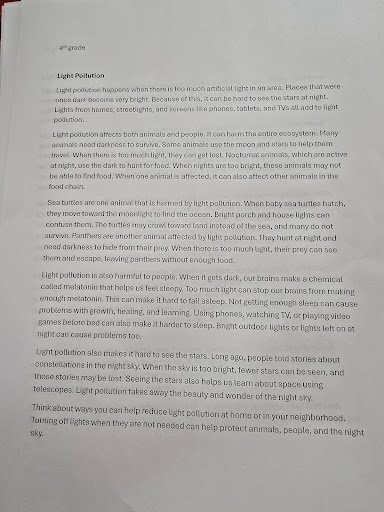
4th grade article
I reviewed the expectations for writing with each grade level.
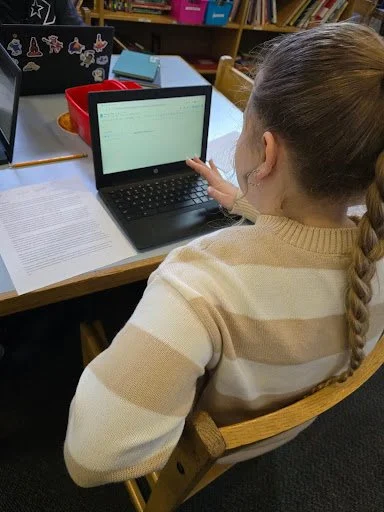
4th grade: three paragraphs — an introduction, a body paragraph with at least two pieces of evidence, and a conclusion
5th grade: five paragraphs — intro, conclusion, and three evidence‑based body paragraphs
To help them self‑monitor, each group used a checklist created by our writing teachers.
The best part was how naturally our conversation drifted back to nature. They weren’t just writing about light pollution; they were thinking about how it affects animals, stargazing, migration, sleep, and our connection to the world around us. They were noticing the night in a way many had never done before.
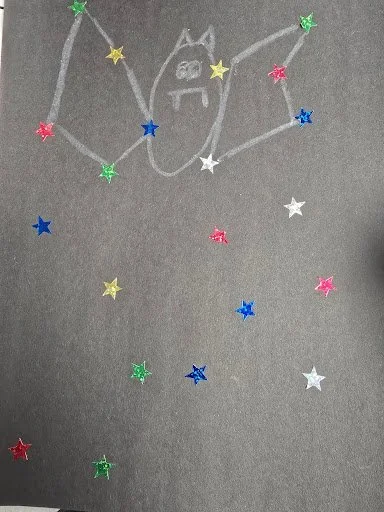
Once the writing was complete, we shifted into a constellation mythology unit to tie everything back to the library. I used two wonderful books:
Glow in the Dark Constellations: A Field Guide for Young Stargazers by C.E. Thompson
Stories of the Constellations by Kieron Connolly
We explored four or five myths, talked about why ancient cultures looked to the sky for stories, and discussed how light pollution affects our ability to see those same patterns today. It was the perfect blend of literacy, science, and cultural history.
To wrap it all up, each student received a piece of black construction paper and twenty tiny star stickers. (Mine were a mix of green, silver, gold, and red — use whatever you can find.) They scattered their stars across the page, then used a white crayon to connect some of the dots into an animal or person. They gave their constellations unique names. And of course, they wrote their own constellation myths — some were hilarious. I was truly shocked by the imagination that went into their stories.
In a world where many children rarely see a truly dark sky, teaching about light pollution isn’t just a science lesson. It’s an invitation to notice, to wonder, to reconnect with something bigger than ourselves. When students realize that their environment shapes what they can see — and what they can’t — they begin to understand their role in caring for it.
And when writing, mythology, and nature come together, the night sky becomes more than a distant concept. It becomes a classroom.
