
#26: Me-ti-go-mah-keence (Chief Jim Woodenfrog) and The Woodenfrog Family
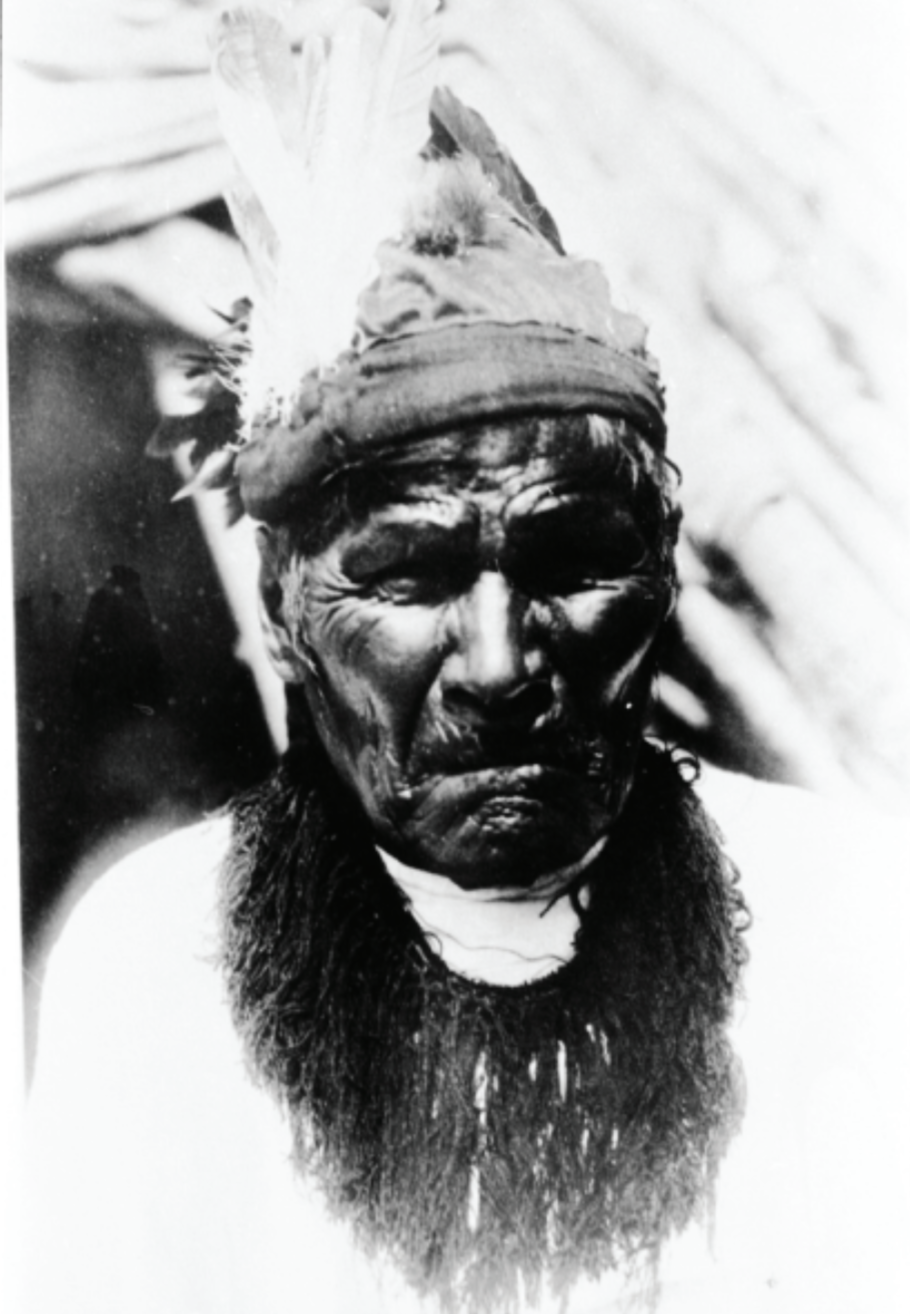
Me Tigo Mah Keence (Jim Woodenfrog) Credit: VNP Neg Roll 26)
Indigenous Peoples have lived in the area that is today Voyageurs National Park for approximately 10,000 years, with the Ojibwe (Anishinaabe) and other nations such as the Cree, Dakota and Assiniboine being prominent stewards of the region. We reflect on the Indigenous peoples that have been here for generations and remain deeply connected to its landscape and stories today.
Among many prominent Ojibwe ancestors is the legacy of Me-ti-go-mah-keence, or Chief Woodenfrog, a respected leader of the Bois Forte Band of Chippewa. Me-ti-go-mah-keence translates as Wood Frog or Tree Frog. Woodenfrog and his family lived near present-day Gold Portage in the Kabetogama area and were among the last Bois Forte families to relocate to the Nett Lake Reservation in the 1930s.
His name endures through several notable place names, including Chief Woodenfrog Island on Kabetogama Lake and Woodenfrog Campground on the southern shore of Kabetogama, which offer tangible connections to Indigenous history and significance in the region.
The earliest photos of the site depict the eastern portion of Chief Woodenfrog Island, showing frameworks of wigwams and other structures that were no longer inhabited at the time. By the 1920s, maps and aerial photographs documented all five structures on the site, indicating a settled community that had existed there in the late 1800s and early 1900s. Using photos from the 1940s, archaeologists relocated and mapped the remains of three structures and associated artifacts in 1996.
The Bois Forte people, including Chief Woodenfrog and his son John, maintained a presence in the Voyageurs area well into the 20th century, despite pressures from treaties, border creation, and resource extraction. In the late 1800s, the discovery of gold in the region brought new waves of miners and travelers. While the summer route from Tower, MN, was most commonly used to reach Rainy Lake City, the winter Blackduck Trail passed through Gold Portage, bringing loggers, mail carriers and freighters into the area where the Woodenfrog family lived.
When gold mining interests faded, logging became the dominant industry in the area. The 1914 construction of dams by logging companies dramatically altered water levels across the park’s lakes – raising both the Namakan basin and Rainy Lake by more than four feet. The resulting unnatural fluctuations damaged wild rice stands, vegetation and wildlife habitat. Wild rice, an essential food source and cultural resource for the Ojibwe, was significantly impacted.
Though many Ojibwe also participated in logging, mining and trade, these broader forces – along with relocation policies and treaty restrictions – deeply reshaped Indigenous community life. Despite this, John Jr. and Jenny (Ge be-gah shig), two of Chief Woodenfrog’s children, remained in the area into the 1930s, carrying forward cultural traditions and maintaining a deep connection to the land.
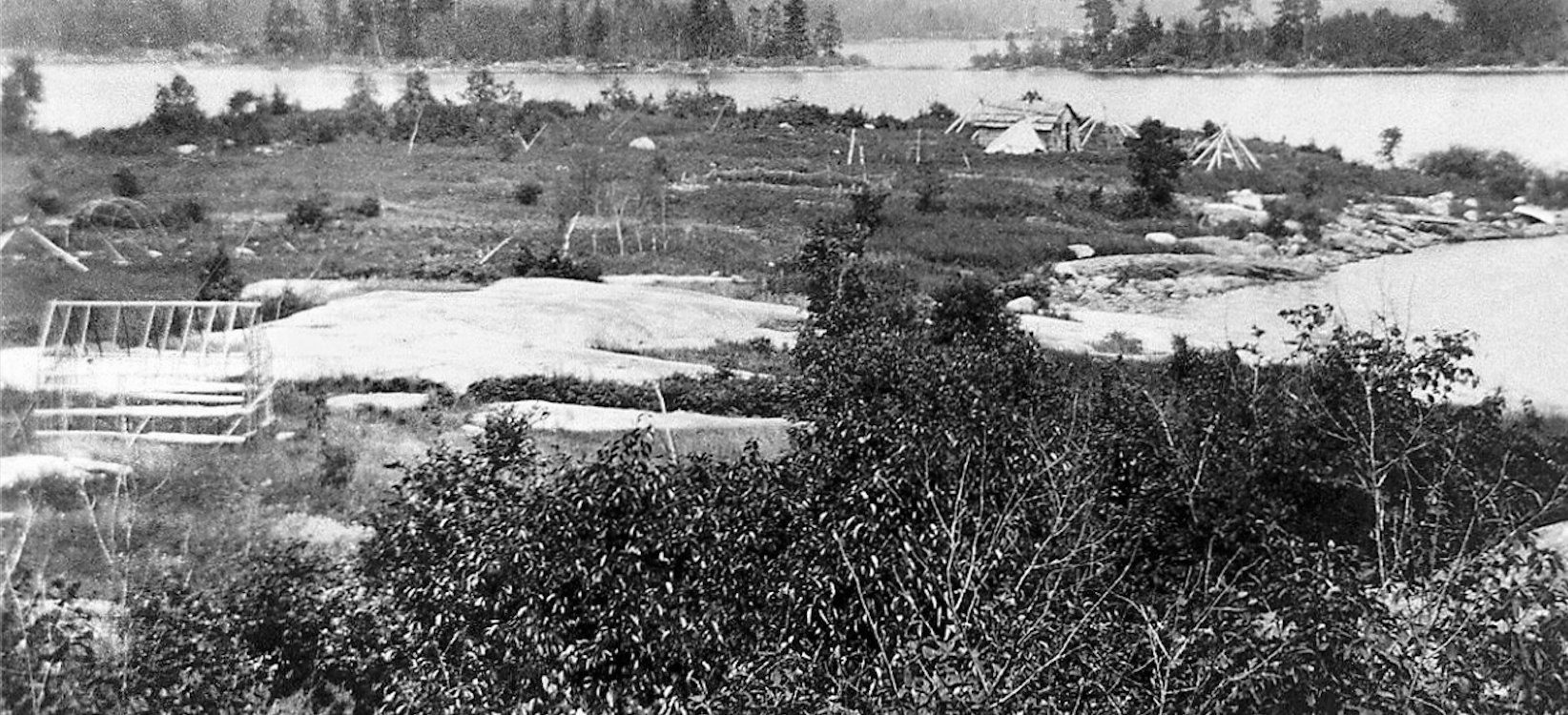
Structures on the eastern portion of Chief Wooden Frog Island in 1913. Credit: NPS
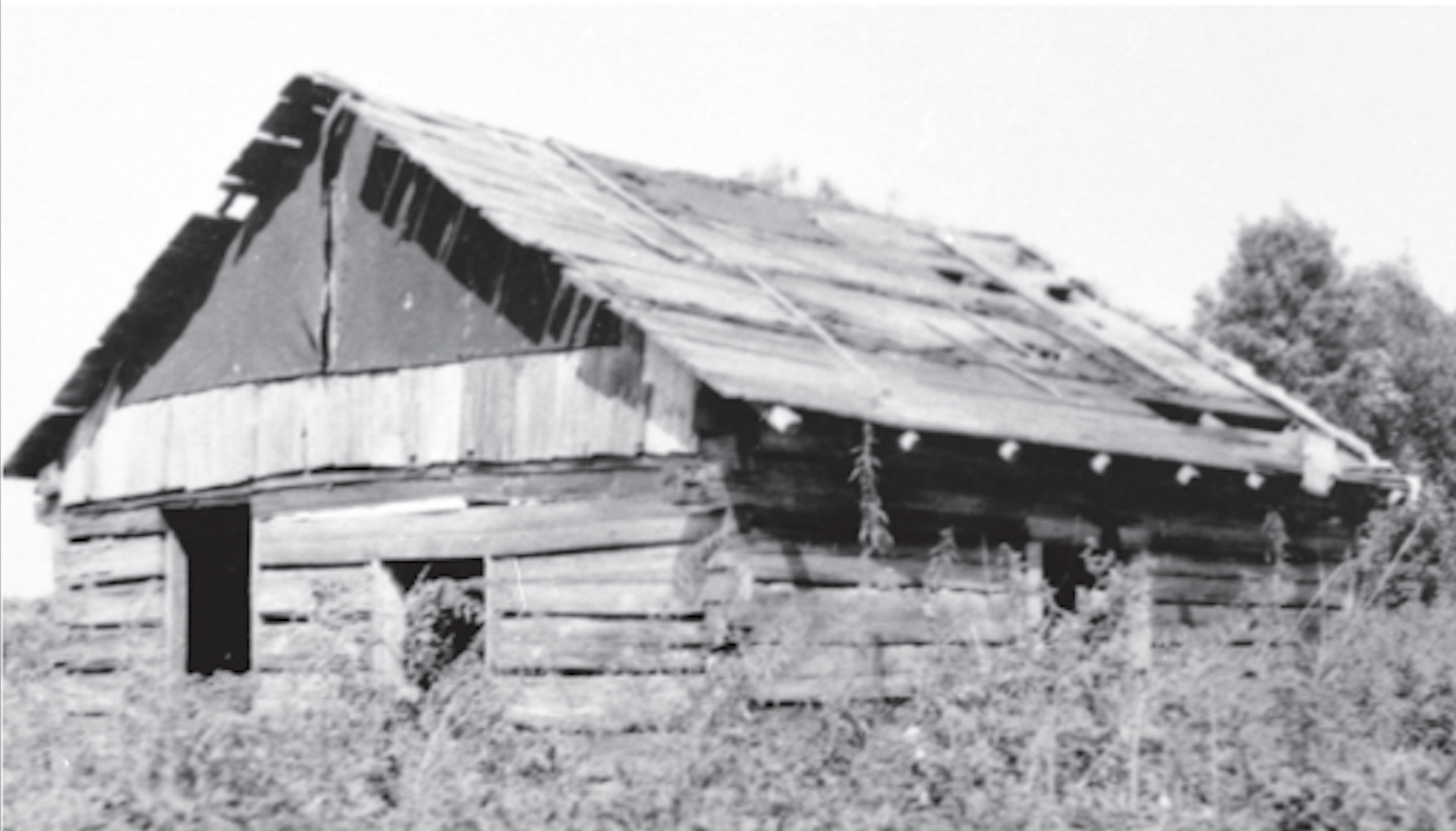
An abandoned log house on Chief Woodenfrog Island, 1947 (Original owner Lorna Volz. Copied with VNP permission)
Ojibwe people in the area were integral to the fur trade, forming close working relationships with voyageurs and traders and shaping the success of this early economy. While today the community is known as the Bois Forte Band of Chippewa, historically this region was home to numerous Indigenous peoples tied together through marriage, trade, and shared transportation routes, all of which were disrupted by treaties, relocation to reservations, and new international borders.
Today, Chief Woodenfrog Island stands as a testament to this enduring legacy. It reminds us of the rich cultural heritage that predates the park’s establishment and the importance of preserving these narratives for future generations.
To learn more about the Bois Forte Band of Chippewa today, please visit their official website or the Bois Forte Heritage Center & Cultural Museum, located approximately one hour southeast of Voyageurs National Park.
Check out the full list of our 50 legacies!
This year, we’re celebrating 50 years of Voyageurs National Park by sharing 50 inspiring stories of the people who shaped its legacy. Years, 50 Legacies is a yearlong storytelling series highlighting individuals whose lives are woven into the fabric of the park – whether through conservation work, cultural traditions, recreation, research, or personal connection.
Raise a canteen and celebrate this historic milestone with us at our 50th anniversary website. Don't forget to subscribe to our newsletter for more inspiring stories and updates!
