
By Bob King
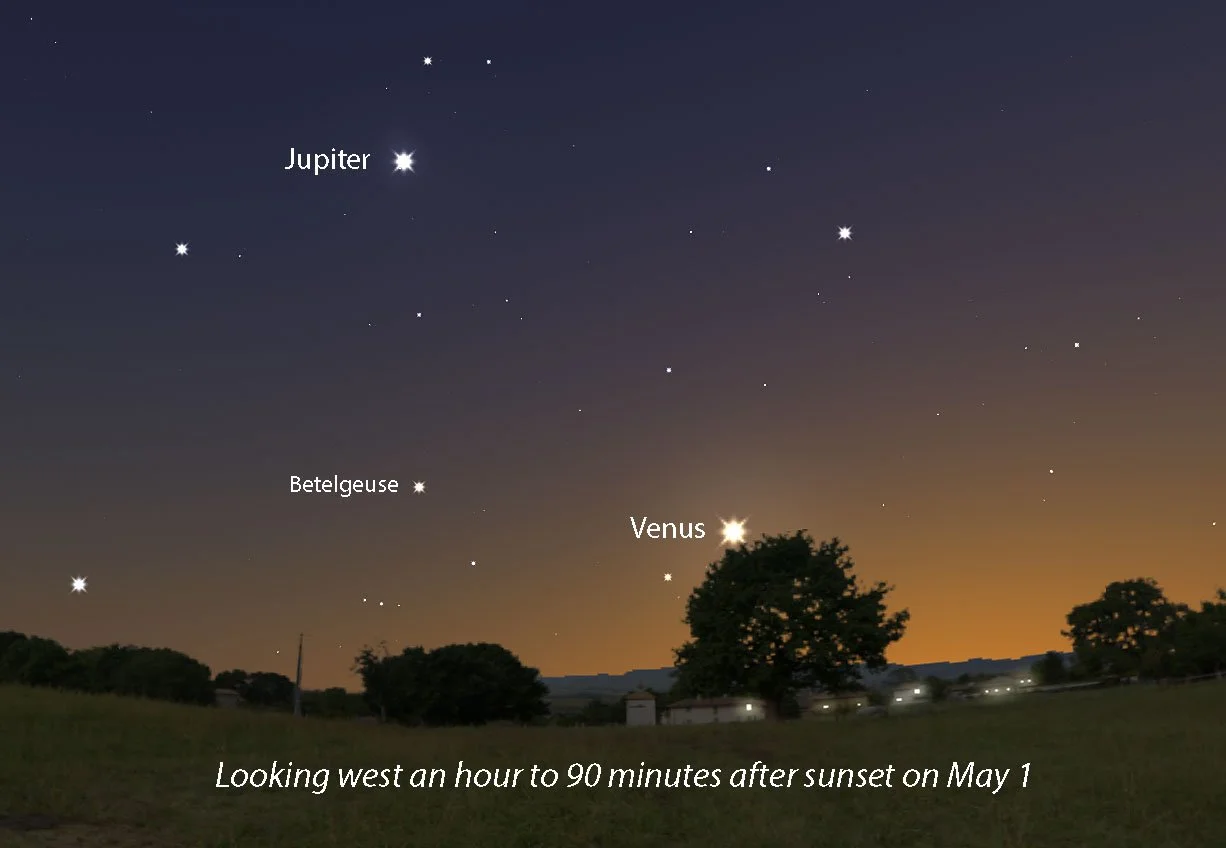
It’s the last month before the mosquitos and wildfire smoke arrive in full force, so if the sky’s clear, poke your head out for a look. Facing west, you’ll see Venus and Jupiter drawing closer together on their way to a stunning, close conjunction in early June.
Venus is the brighter of the two and closer to the horizon. The cloud-covered planet shines far to the east of the sun and sets quite late – around midnight at mid-month. Perpetual clouds and proximity to Earth make Venus both the brightest and closest planet. This month’s must-see highlight will be the crescent moon-Venus conjunction on May 18. We’ll also have a Blue Moon!
Mercury, the other inner planet, emerges into evening twilight during the last week of May.
Mars and Saturn ply the morning sky at dawn. The Red Planet is still swamped in the solar glow, but Saturn finally returns to view this month low in the southeastern sky about an hour before sunrise. The moon will point you to it on May 13.
May features the annual Eta Aquariid meteor shower, which originates from Halley’s Comet. Although the comet won’t return to Earth’s vicinity until 2061, every May our planet plows through comet dust strewn around its orbit. The debris vaporizes in our atmosphere in bright flashes to make a meteor shower.
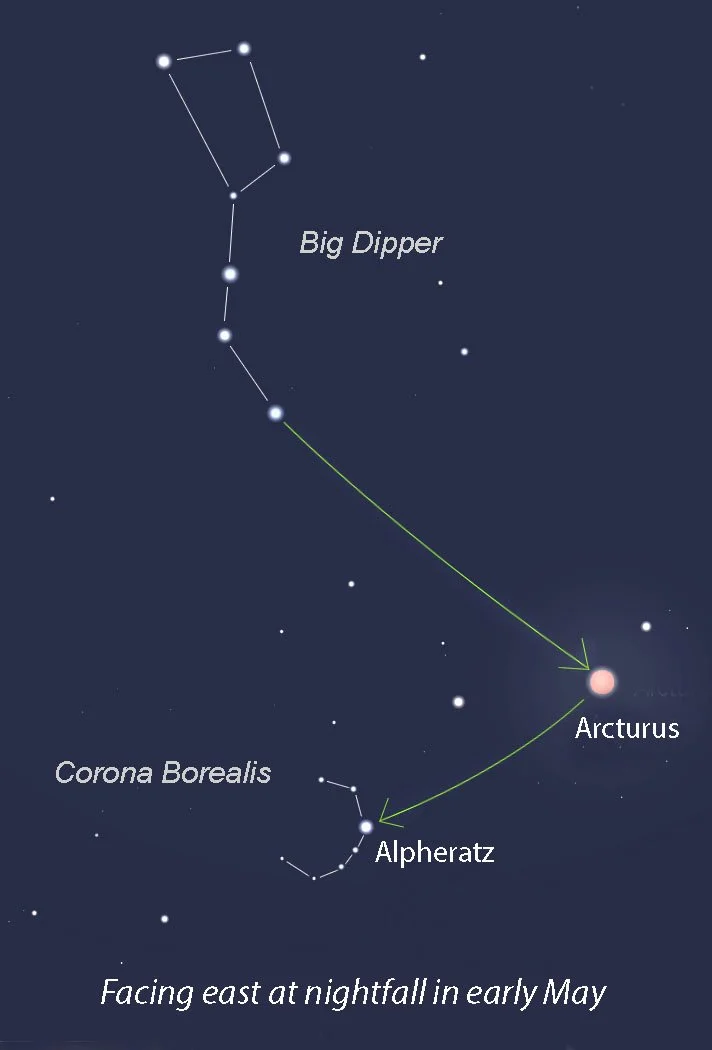
Our featured constellation is Corona Borealis the Northern Crown, a small semi-circle of stars to the left of the prominent orange-red star Arcturus in the constellation Boötes the Herdsman. Corona looks just like its name, which makes it stand out though it has but one bright star, Alphecca (al-FEK-uh). The name comes from al-fakka, the Arabic name for the constellation.
The figure represents the jeweled crown worn by Ariadne, mythical princess of Crete. When Dionysus, the Greek god of wine-making and fruitfulness, married her, he removed the crown and flung it into the heavens to honor his new wife and immortalize their love.
Download the free Stellarium Mobile app for Android and iPhone to help you find and identify the current planets and constellations. It will also display Jupiter’s moons, which can help you track them down with binoculars or a telescope. Do a Google search, then install the app, set it in night mode (red screen) and point your phone skyward.
For a free May 2026 sky map and calendar go to skymaps.com/downloads.html. For updates, aurora alerts and news, check out my Facebook at facebook.com/astrobobking.
Events (a.m. indicates the event happens in the morning sky)
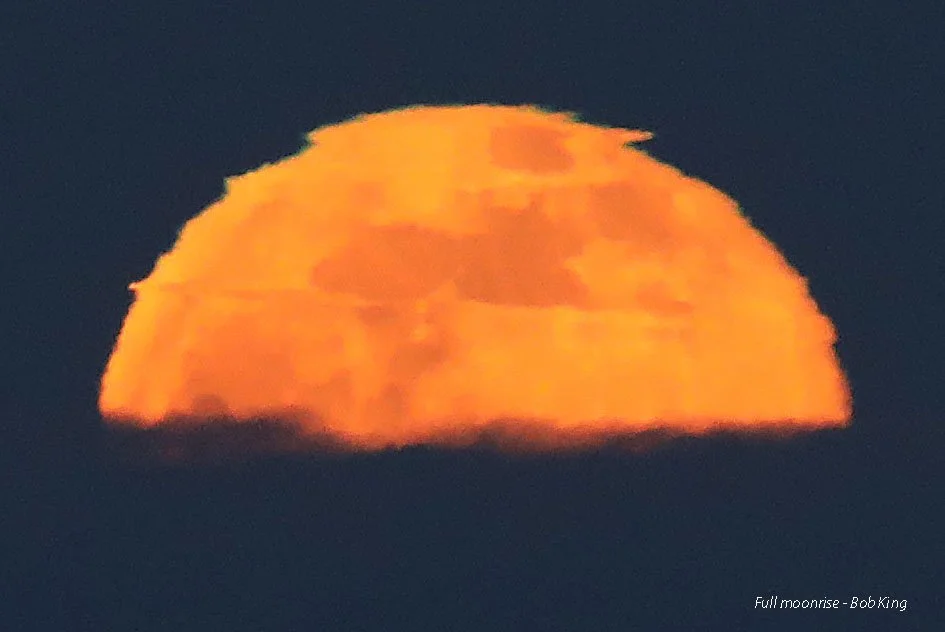
May 1 – Full Flower Moon. The moon will rise in Libra a little after sunset and shine all night.
May 4 – Waning gibbous moon shines to left of bright, red-orange Antares, Scorpius’ brightest star.
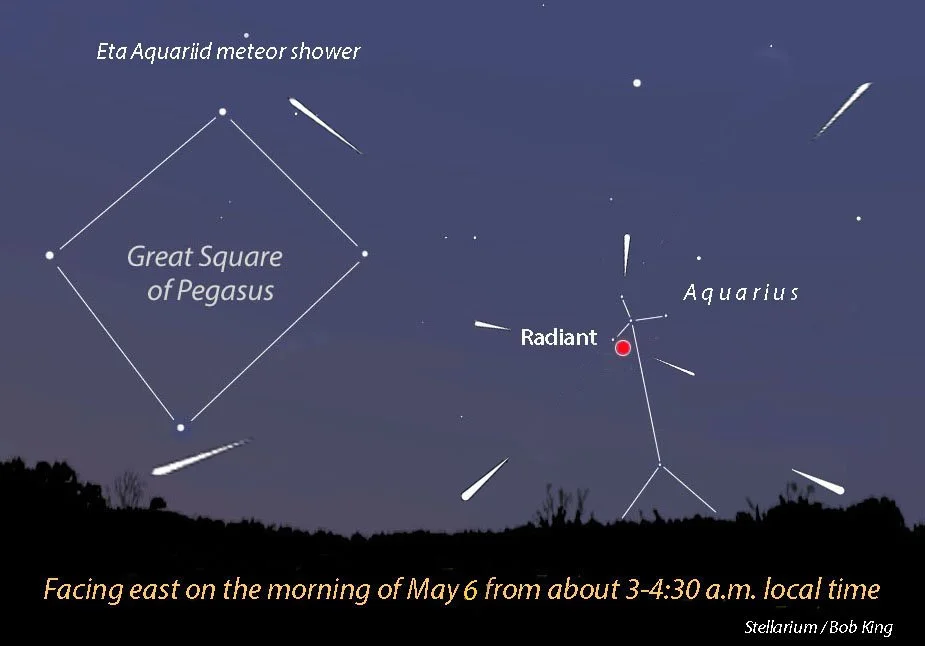
May 6 (a.m.) – Peak of the annual Eta Aquariid meteor shower. Best viewing is the hour or two before dawn. Heads up! This year, the bright, waning gibbous moon will reduce meteor counts to 10 or fewer per hour.
May 9 – Last quarter moon. Rises around midnight and stands due south around sunrise.
May 9-26 – The International Space Station will make from one to three passes each night. For a complete list of flyovers for your city, log in to Heavens-Above.com, select your location and then click the blue ISS link. Or download and install NASA’s Spot the Station app at the app store or Google Play.
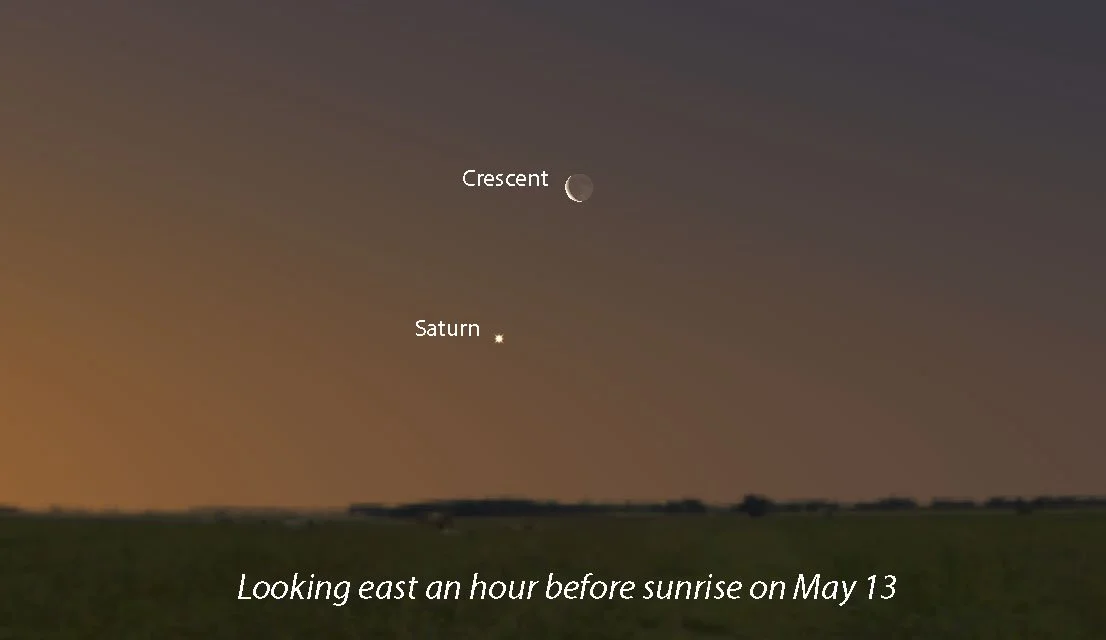
May 13 (a.m.) – Waning crescent moon stands about 6 degrees (one binocular field) above and right of Saturn low in the southeastern sky an hour before sunrise.
May 16 – New Moon. The moon is near the sun in the daytime sky and not visible.
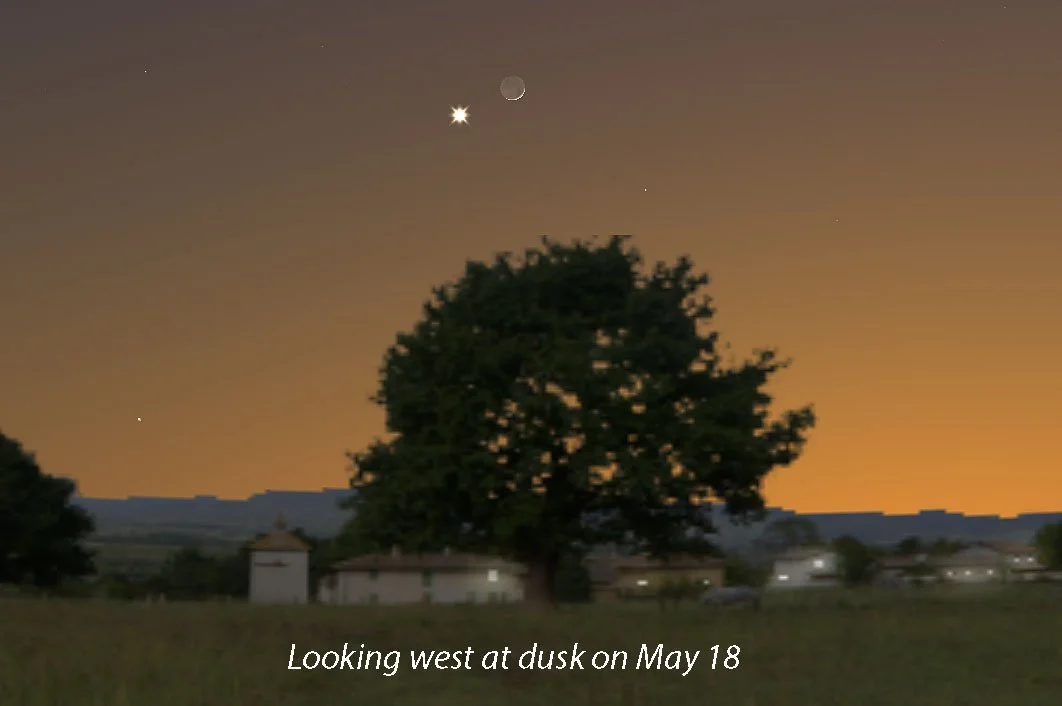
May 18 – Spectacular conjunction of Venus and the thin waxing moon at dusk in the northwestern sky.
May 19-21 – Venus passes just north of the rich star cluster M35 in Gemini. Use binoculars and look about an hour after sunset. Closest on May 20.
May 19-28 – The Chinese space station Tiangong (Heavenly Palace) will make 1-2 passes each night. For a complete list of flyovers for your city, log in to Heavens-Above.com, select your location and then click the blue Tiangong link. The station is smaller than the ISS and not as bright but still easy to see. At peak, it’s a good match for Arcturus.
May 20 – Waxing crescent moon to the upper left (east) of Jupiter at nightfall.
May 22 – First quarter moon shines to the lower right of Regulus, Leo’s brightest star.
May 27-31 – Mercury returns at dusk low in the northwestern sky below Venus. Although it will be bright, the twilight glow may make it somewhat challenging to see with the unaided eye. Use binoculars.
May 30-31 – Second full moon of the month makes it a Blue Moon! It will shine just to the lower right of Antares in Scorpius. Blue Moons occur when the first full moon lands on or close to the first day of the month, leaving enough time for the moon to go through its cycle again before the month ends. Also, when a season has four instead of three full moons, the 4th is considered a Blue Moon.
May 31 – Venus and Jupiter just 8.5 degrees apart in the western sky during late evening twilight.

Bob King is an amateur astronomer, author, and passionate educator. He served as a photographer and photo editor at the Duluth News Tribune for 39 years and taught at the UMD planetarium. Bob’s work had a great impact on Voyageurs National Park. To achieve International Dark Sky Park certification, the park was required to host dark sky education events. Through the Night Sky Explorer webinars, the Conservancy was able to fulfill this component and help secure the certification for Voyageurs National Park. We can’t thank Bob King enough for sharing his talents and knowledge with the Conservancy community to support dark sky preservation.
