
January 2026 Night-sky Sights
By Bob King
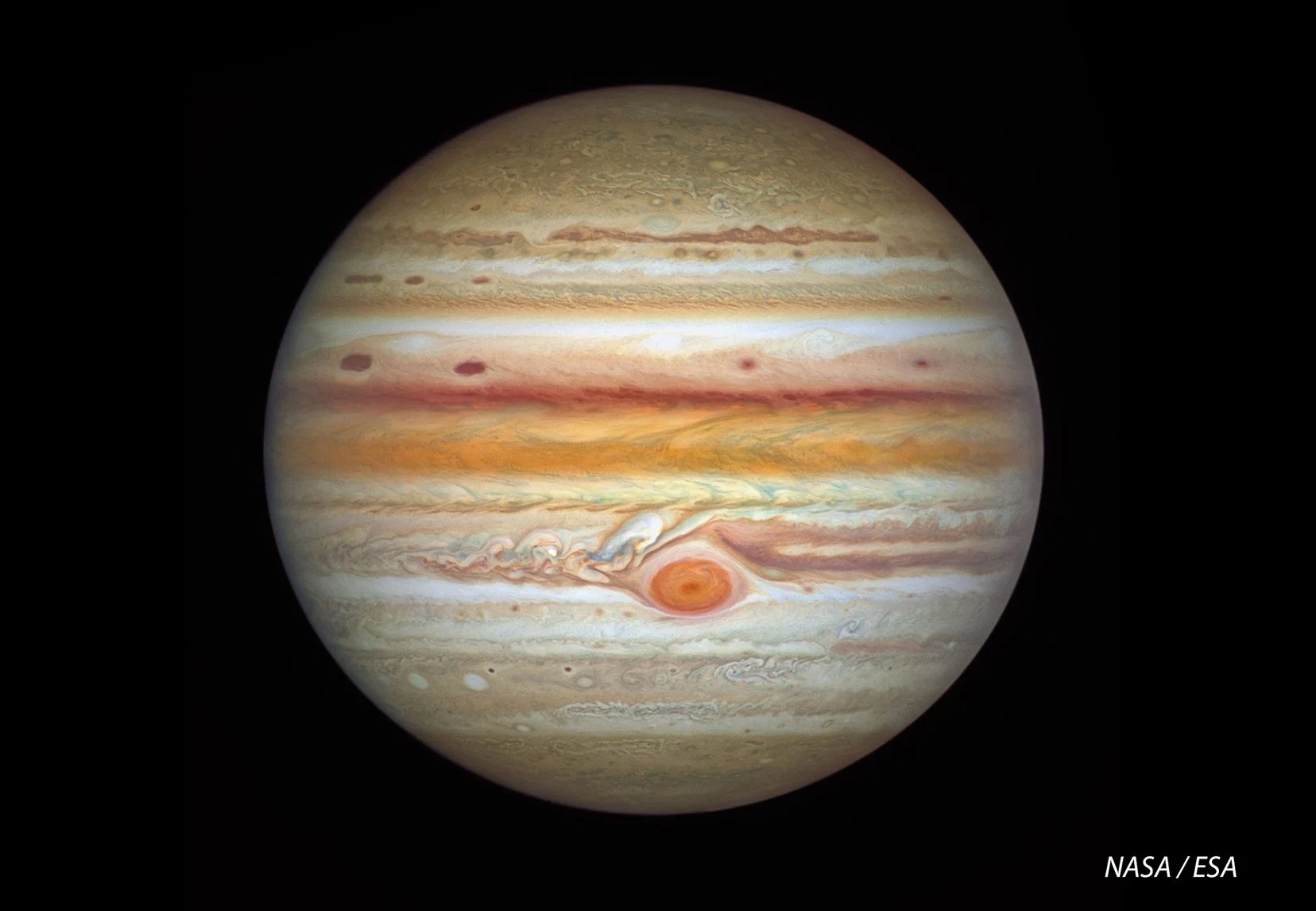
January may be cold, but it sparkles with snowflakes and stars. Although nights begin to grow shorter this month, they’re still long and luxurious. You can stargaze after dinner, go to bed at your normal time and get up the next morning to watch a sunrise without skipping a beat. Eight of the brightest stars and two planets — Jupiter and Saturn — ornament the winter firmament. Mars, Mercury and Venus are all too close to the sun and hidden by its glare.
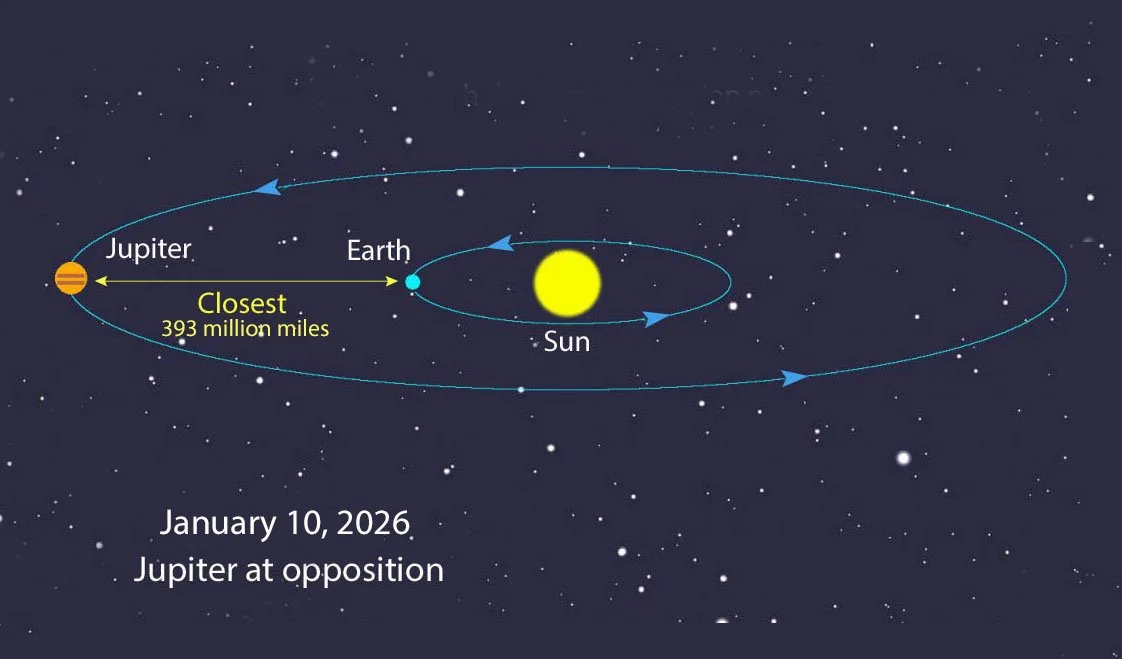
Jupiter, the largest planet, is so big it could hold more than 1,300 Earths. On January 10 Earth and Jupiter will pair up on the same side of the sun and come closest to one another for the year. For observers that means the planet will glow extra bright and appear extra big when viewed through a telescope. About every 13 months, the faster Earth laps Jupiter. When they’re closest, Jupiter is at opposition because it’s on the opposite side of the Earth from the sun. From our perspective, Jupiter rises in the east just as the sun sets in the west.
I enjoy looking at the planet in binoculars, where you can occasionally spot up to 4 of its bright moons. They huddle very close to Jupiter and often lie along a straight line. Through a telescope the moons are easy-peasy, plus you’ll see the cloud belts and maybe catch of glimpse of the planet’s largest storm, the Great Red Spot. Other highlights include the Quadrantid meteor shower, although it’s compromised by the moon this time around, and the return of the International Space Station to the evening sky.
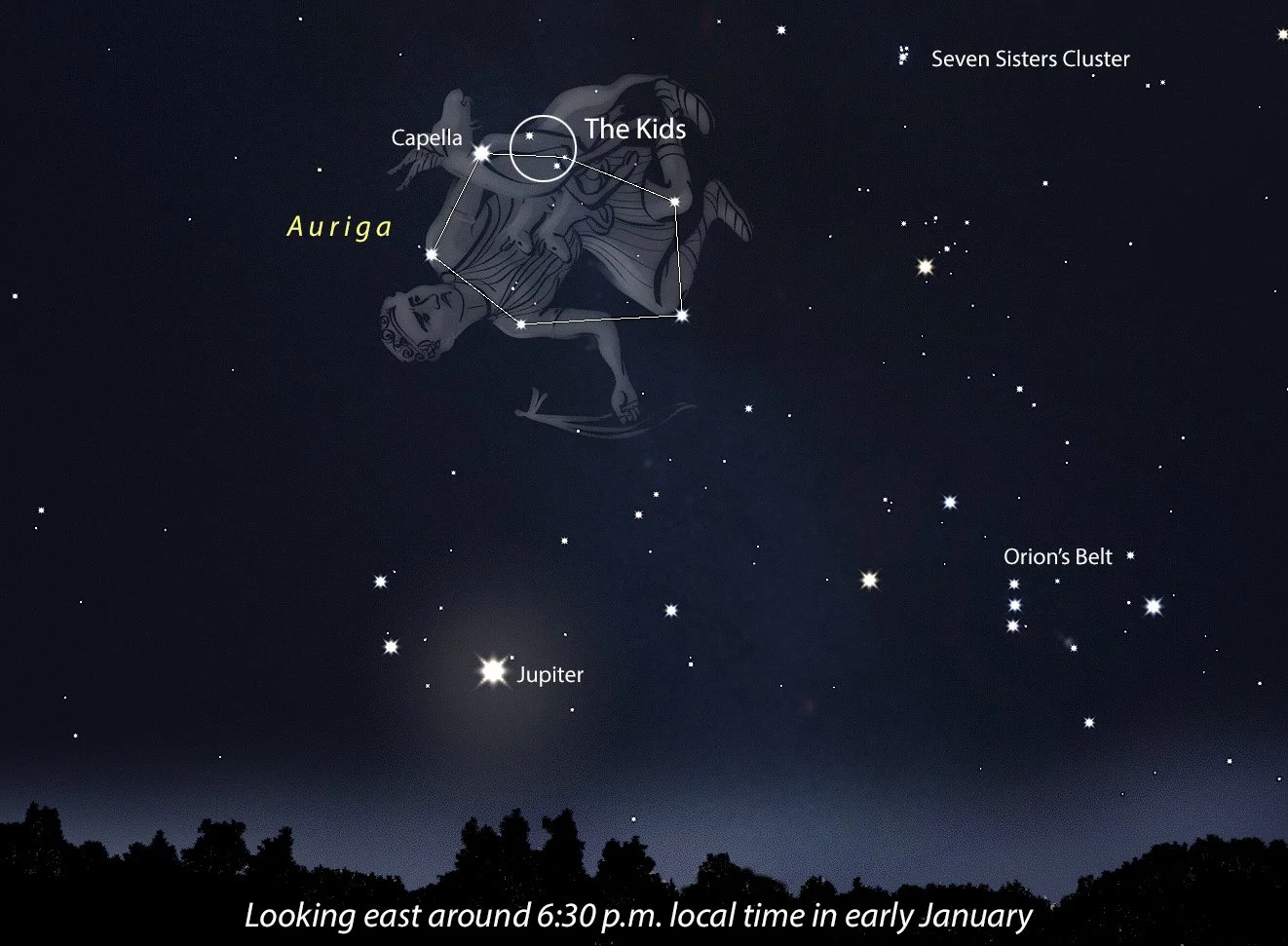
Our featured constellation is Auriga the Charioteer, which stands high in the eastern sky as soon as it gets dark. Start at Capella, its brightest star, and connect it to four additional, moderately bright stars in the vicinity to make a pentagon or simple, house-shaped figure. In Greek mythology Auriga (or-EYE-guh) is identified as a legendary king of Athens. He made it into the stellar pantheon by becoming the first person to figure out how to harness four horses to a chariot. Capella itself is a Roman name meaning "she-goat" and represents the goat Amaltheia.
Just to the right of Capella look for a compact triangle of fainter stars, an asterism called “The Kids” and representing the goat’s babies. Officially, only the paired stars at the triangle’s base are the Kids, but most of us lump in the third.
Download the free Stellarium Mobile app for Android and iPhone to help you find and identify the current planets and constellations. It will also display Jupiter’s moons, which can help you track them down with binoculars or a telescope. Do a Google search, then install the app, set it in night mode (red screen) and point your phone skyward. For a free January 2026 sky map and calendar go to skymaps.com/downloads.html. For updates, aurora alerts and news, check out my Facebook at facebook.com/astrobobking.
Events (a.m. indicates the event happens in the morning sky)
Jan. 3 – Full Wolf Moon. Since the full moon occurs at 4:02 a.m. CST this morning, it will rise almost-full two nights in a row, on Jan. 2 and 3.
Jan. 3 – Full moon shines to the left of Jupiter tonight.
Jan. 3 – Earth at perihelion and closest to the sun at 91.4 million miles. Greatest distance or aphelion occurs on July 6 at 94.5 million miles. Earth’s orbit is an ellipse rather than a circle, the reason its distance from the sun varies throughout the year.
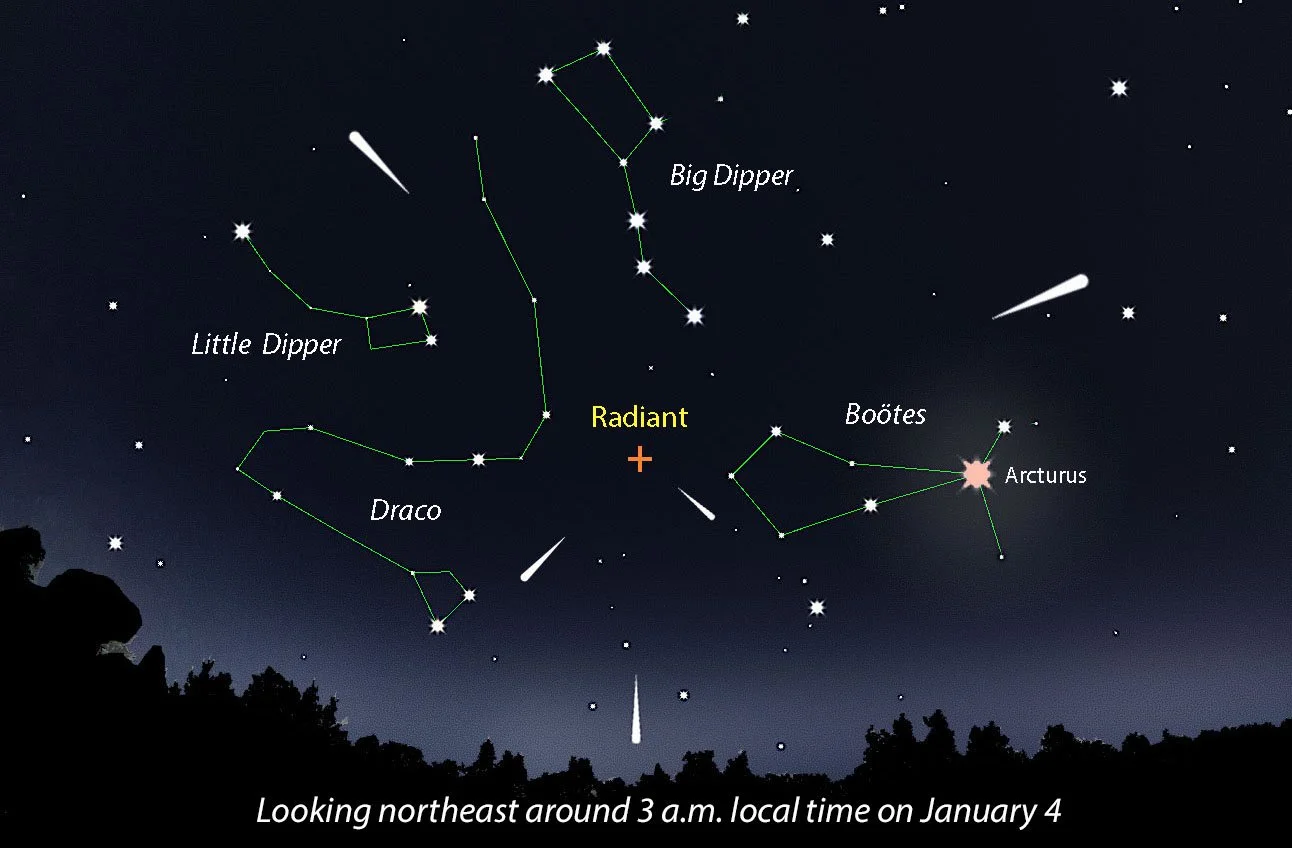
Jan. 4 (a.m.) – Peak of the annual Quadrantid meteor shower. When the timing is the right, and the moon doesn’t interfere, the shower can produce up to 100 meteors per hour. This year’s bright full moon will reduce the rate to around 15-20 per hour. Meteors stream from below the handle of the Big Dipper located in the northeastern sky. Best viewing is from about 3-6 a.m. local time.
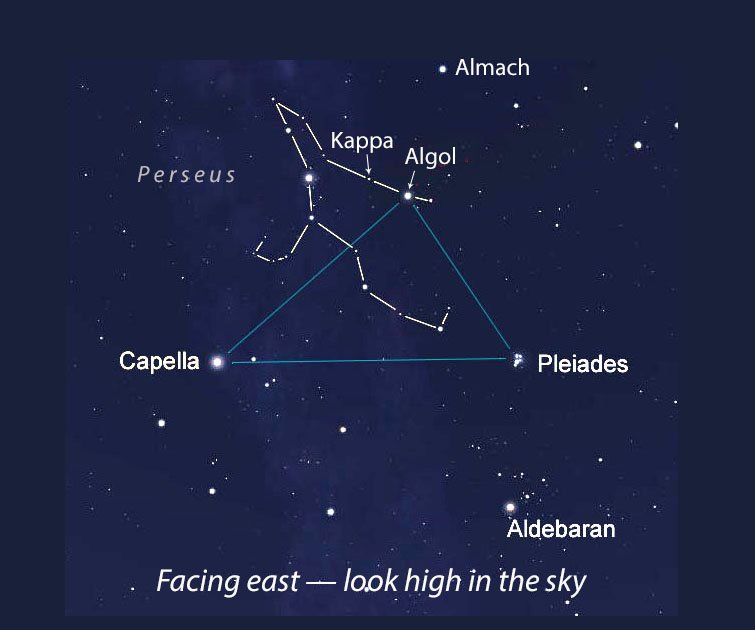
Jan. 9 – Algol the Demon Star dips to minimum brightness around 8 p.m. CST as its orbiting companion star eclipses it. By midnight, as it comes out of eclipse, it will re-brighten. Use the map to locate Algol. When brightest it's similar to Almach. At minimum it’s closer to Kappa Persei.
Jan. 10 (a.m.) – Last quarter moon. The half-moon appears in the southern sky at sunrise.
Jan. 10 – Jupiter at opposition and closest to the Earth for the year. Look for the brilliant planet in the eastern sky a little more than 3 fists to the left of Orion’s Belt as early as 6:30 p.m. local time. The solar system’s biggest planet will be only 393 million miles away.
Jan. 10-30 – The International Space Station arcs once or twice a night across the evening sky. For a complete list of flyovers for your city, log in to Heavens-Above.com, select your location and then click the blue ISS link. Or download and install NASA’s Spot the Station app at the app store or Google Play.
Jan. 14 (a.m.) – Thin waning crescent shines to the right Antares, brightest star in Scorpius.
Jan. 18 – New Moon. The moon is near the sun in the daytime sky and not visible.
Jan. 22 – Waxing lunar crescent shines below Saturn tonight
Jan. 25 – First quarter moon. The half-moon stand south at sunset and sets around midnight.
Jan. 29 – Algol at minimum brightness around 9:45 p.m. CST. Look as soon as it gets dark to see
the star close to peak brightness, then check again around 9:45 p.m. when it dips to minimum.
Jan. 30 – Waxing gibbous moon shines above Jupiter tonight
Jan. 31 – Venus returns to the evening sky? It might be visible in binoculars very low in the west-southwest 10-15 minutes after sunset.
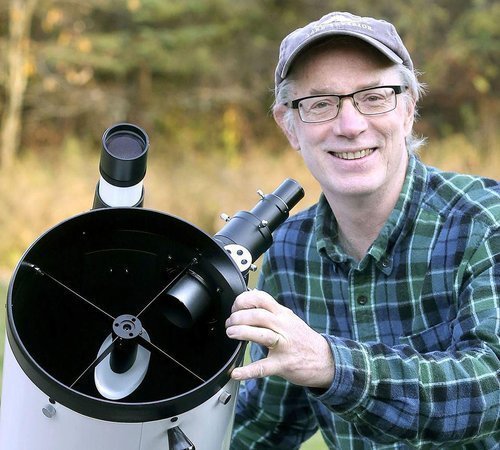
Bob King is an amateur astronomer, author, and passionate educator. He served as a photographer and photo editor at the Duluth News Tribune for 39 years and taught at the UMD planetarium. Bob’s work had a great impact on Voyageurs National Park. To achieve International Dark Sky Park certification, the park was required to host dark sky education events. Through the Night Sky Explorer webinars, the Conservancy was able to fulfill this component and help secure the certification for Voyageurs National Park. We can’t thank Bob King enough for sharing his talents and knowledge with the Conservancy community to support dark sky preservation.
