
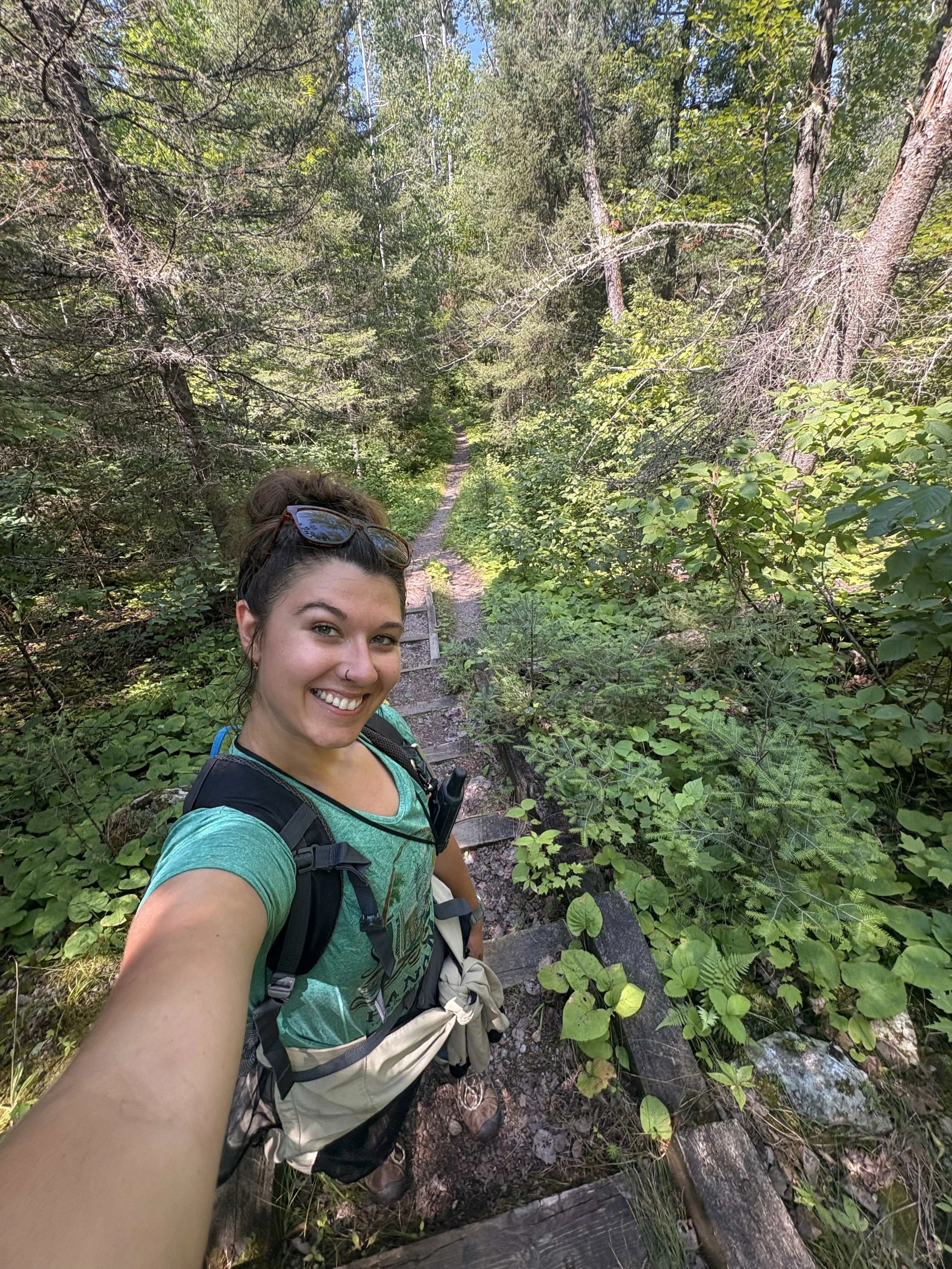
Hannah Renslow grew up in Minnesota with a love for the outdoors and a lifelong admiration for the National Park Service. Her uncle spent 25 years with the National Park Service, and many of Hannah’s formative years were spent visiting him all around the country. Those visits planted a seed that would grow into a full-blown passion. Fast forward to today, and Hannah, a recent graduate with a BA in Environmental Science and Ecology from the University of Wisconsin-Eau Claire, followed in her uncle’s footsteps by spending her summer making a real impact at Voyageurs National Park.
Hannah’s summer was a mix of adventure, science, and hard work. She spent her time tackling projects that range from invasive plant control to wildlife monitoring, including managing over 500 acres of shoreline overtaken by invasive hybrid cattails.
“It’s like a puzzle,” Hannah explains. “We survey the land, figure out the best method to fight the cattails, then use everything from brush cutting to Truxors to restore native species like wild rice. It’s hands-on work that actually makes a difference.”
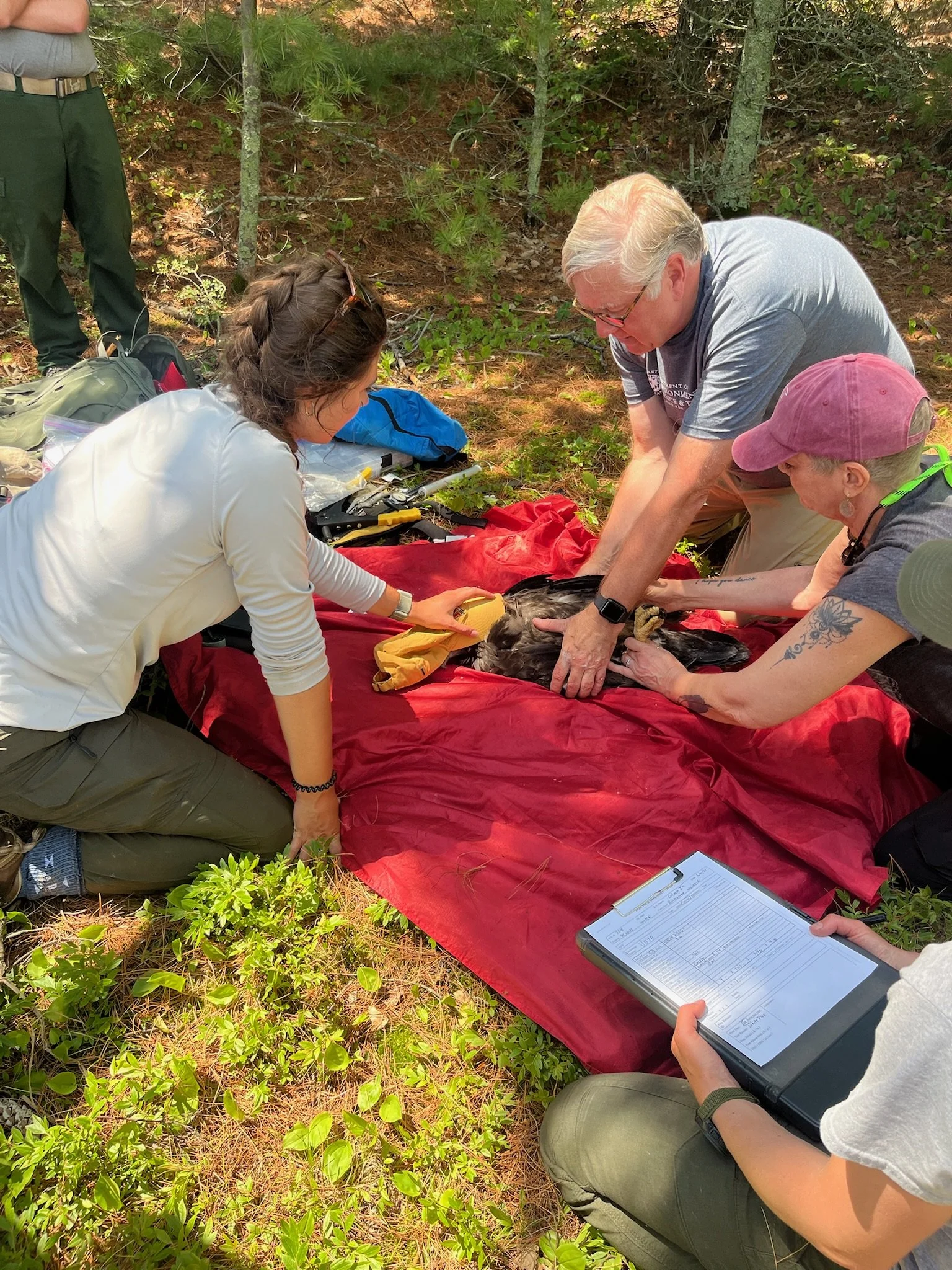
Hannah is stretching her skills beyond botany by helping with bat monitoring and loon surveys. Every day brings a new species, a new challenge, and new surprises. “You never know what you’ll encounter out here,” she says, recalling a loon that appeared just ten feet away during fieldwork.
Beyond field experience, the fellowship is giving Hannah a boost for her future career. Through the program, she’s earned a variety of certifications and qualifications, particularly through the Motorboat Operator Certification Course, which she’s hoping will help her pursue future opportunities within the NPS or environmental non-profits. “It’s amazing how much I’m learning,” she says. “I feel like I’m building a foundation for a lifelong career in conservation.”
Being born and raised in Minnesota gives Hannah a special connection to Voyageurs. She knows the local ecology and history, has studied the species growing up, and found the park a perfect first step after graduation. But what makes it even more special? The people. “Everyone here shares the same passion for nature,” she says. “The connections you make are invaluable.”
Hannah’s advice is simple but powerful: “Be brave and take the position. Don’t let fear stop you. The people you meet and the experiences you have are worth it.” She also hopes more people understand the park’s cultural significance, from the history of the land to its importance to First Nations communities. During wetland-focused weeks, Nicole spent significant time on invasive species management, learning treatment techniques like underwater cutting and the careful use of herbicides. She also helped conduct vegetation surveys to track the health of Voyageurs National Park’s ecosystems. Later in the summer, a wildlife-focused week brought a standout project: replacing bat monitors across the park. These devices record ultrasonic calls that help scientists identify species and estimate population sizes.
Learn more about the Field Fellow experience by watching our “Field Stories” webinar from earlier this year!
Support Field Fellows:
The Conservancy’s Voyageurs Field Fellows program seeks to increase accessibility and professional development opportunities at Voyageurs National Park. The fellowship offers students and recent graduates a stipend-paid internship to engage in real world, hands-on work in areas such as preservation, natural resource management, environmental education and more. If you’d like to support future Field Fellows and their important work, please consider becoming a member with a gift today.
Funding for the Voyageurs Field Fellowship program is generously supported by Voyageurs Conservancy members, the Fredrikson & Byron Foundation, Elmer & Eleanor Andersen Foundation, and the Minnesota Environment and Natural Resources Trust Fund as recommended by the Legislative-Citizen Commission on Minnesota Resources (LCCMR). The Trust Fund is a permanent fund constitutionally established by the citizens of Minnesota to assist in the protection, conservation, preservation, and enhancement of the state's air, water, land, fish, wildlife, and other natural resources.
