
By Bob King
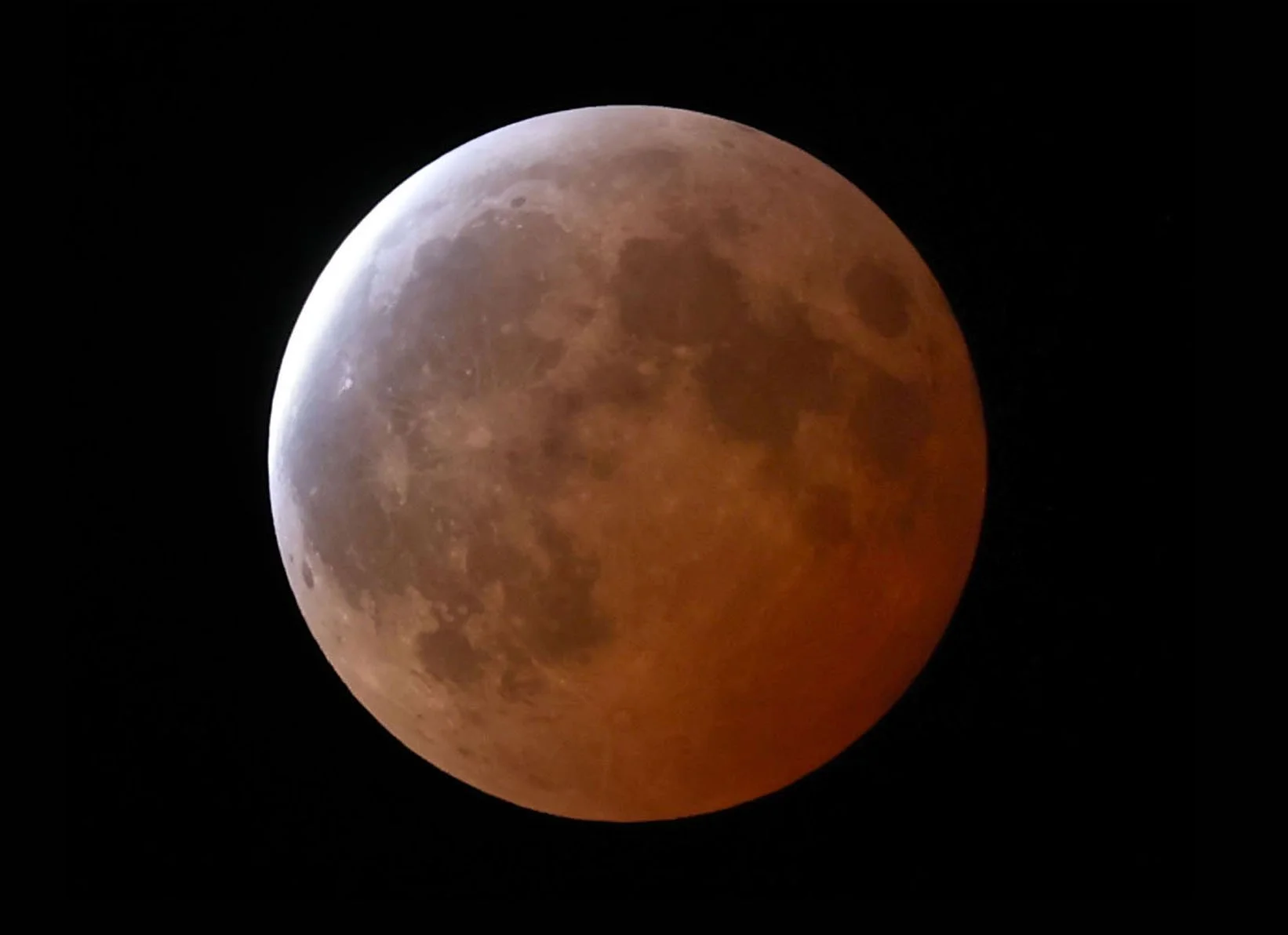
The August 27-28 partial lunar eclipse will be a deep one, with about 96% of the lunar disk hidden by Earth's shadow. Bob King
Will August bring cooler days? Maybe. One thing’s for sure. The nights will start earlier and last longer. There’s even a hint of winter in the sky. If you’re up at the start of dawn, you’ll catch sight of Orion’s Belt rising in the eastern sky.
Venus is the first planet visible at dusk, shining low but bright in the southwestern sky. Saturn makes its appearance in the southeastern sky around 11:30 p.m. early in the month and by 10 p.m. on August 31. Mars continues to slowly brighten as it travels east from Taurus into Gemini. This tempting cherry-red treat is strictly a morning sight best viewed between 3 a.m. and dawn in the northeastern sky.
Mercury will be in good view at dawn during the first half of the month. Before it departs, it joins Jupiter on August 15 in a spectacular, close conjunction. The month features three BIG events: a total solar eclipse, which will be partial for the upper Midwest, the Perseid meteor shower and a near-total eclipse of the moon.
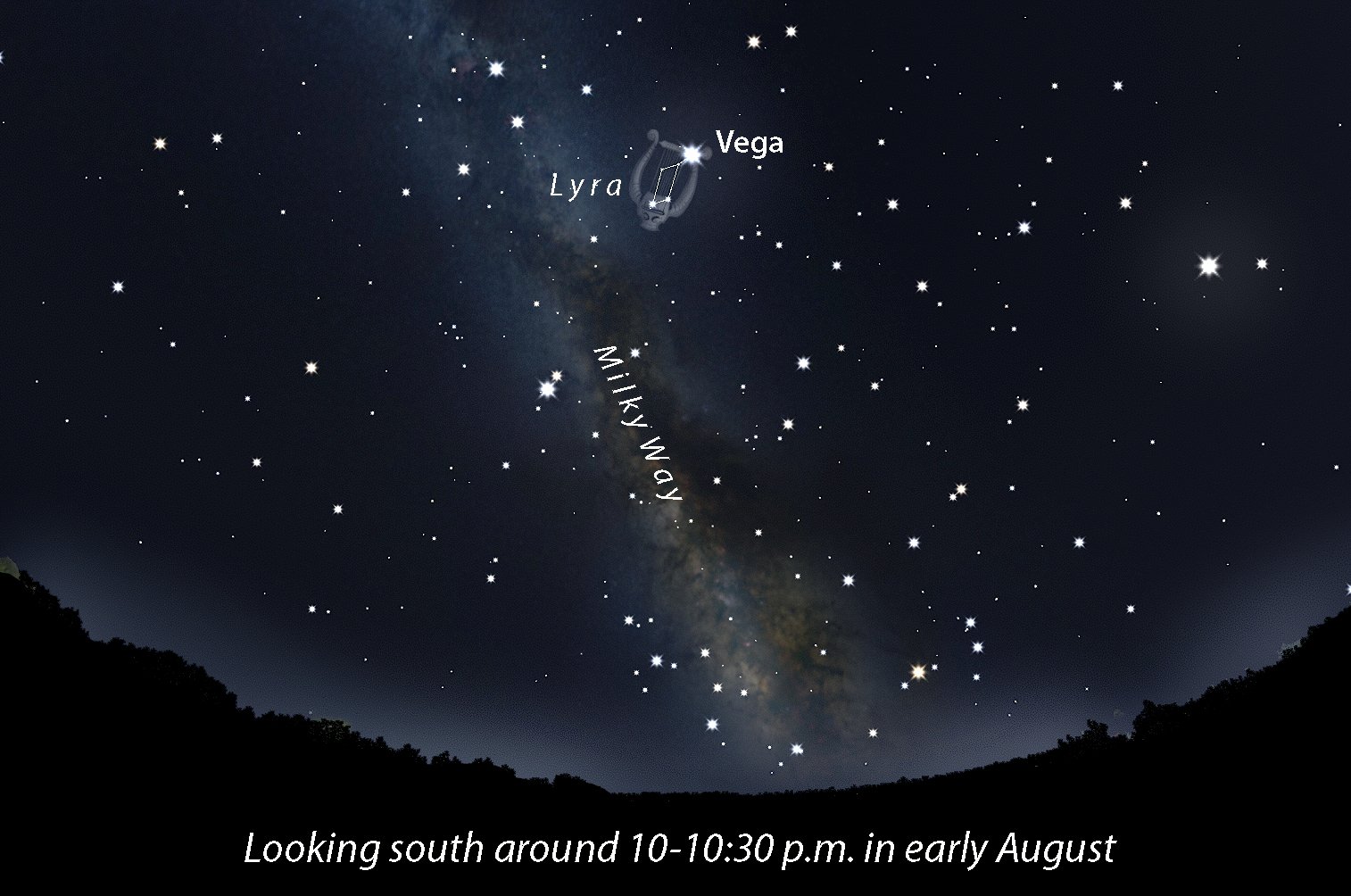
Our featured constellation is Lyra the Lyre, a small stringed instrument resembling a handheld harp. You’ve probably been looking unknowingly at Lyra for years because its brightest star is Vega, a brilliant, white diamond and the 5th brightest nighttime star. To see Lyra just look straight up around 10 o’clock. A small parallelogram of four faint stars directly below Vega and a single star above it outline the lyre. The Greek god Hermes fashioned the small harp from a tortoise shell with strings of cow gut. As the tales goes, legendary musician Orpheus played it so sweetly he made the gods and goddesses cry.
Download the free Stellarium Mobile app for Android and iPhone to help you find and identify the current planets and constellations. It will also display Jupiter's moons, which can help you track them down with binoculars or a telescope. Do a Google search, then install the app, set it in night mode (red screen) and point your phone skyward.
For a free August 2026 sky map and calendar go to www.skymaps.com/downloads.html. For updates, aurora alerts and news, check out my Facebook at https://www.facebook.com/astrobobking.
Events (a.m. indicates the event happens in the morning sky. All times are Central Daylight.)
August 4 (a.m.) – Waning gibbous moon shines to the upper left of Saturn this morning.
August 5 (a.m.) – Last quarter moon. Rises around midnight and shines in the south at dawn.
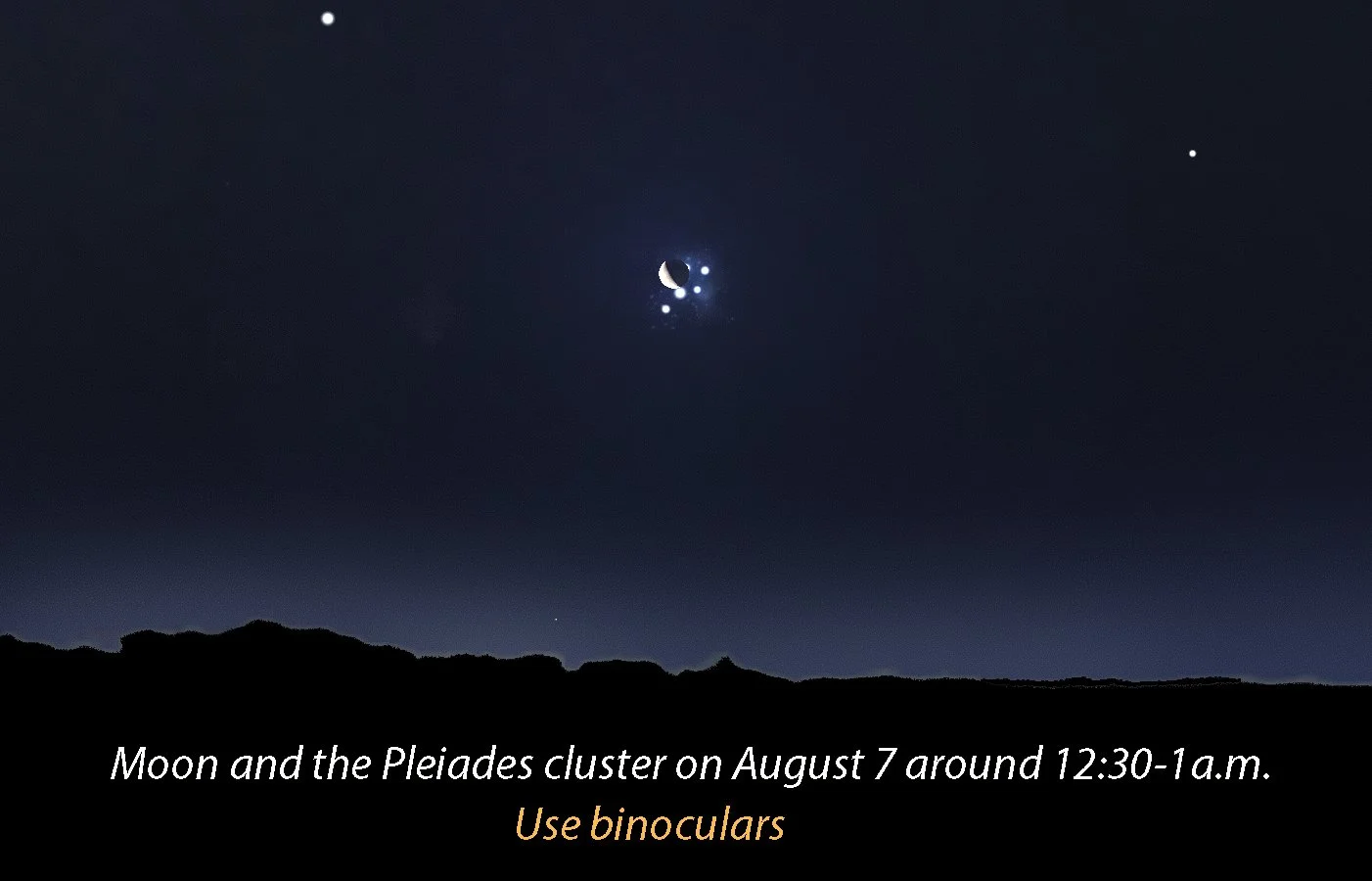
August 7 (a.m.) – Thick waning crescent shines inside the Pleiades cluster when shortly after it rises this morning. Look between about 12:30-1:30 a.m.
August 9 (a.m.) – Waning moon shines to the left of Mars from 2:30 till dawn in the northeastern sky.
August 11 (a.m.) – Super-thin lunar crescent passes just 2 degrees above Mercury in conjunction. Look low in the eastern sky about 1 hour to 45 minutes before sunrise.
August 12 – New moon – Total solar eclipse visible from parts of Greenland, Iceland and Spain. Partial eclipse visible from the northeastern U.S., Alaska and much of Canada. For Minneapolis only 0.5% of the sun will be covered at maximum at 12:13 p.m. Be sure to use a safe, approved solar filter like eclipse glasses to view the eclipse. NEVER look directly at the sun without a filter. To find out your eclipse details go to: https://www.timeanddate.com/eclipse/solar/2026-august-12
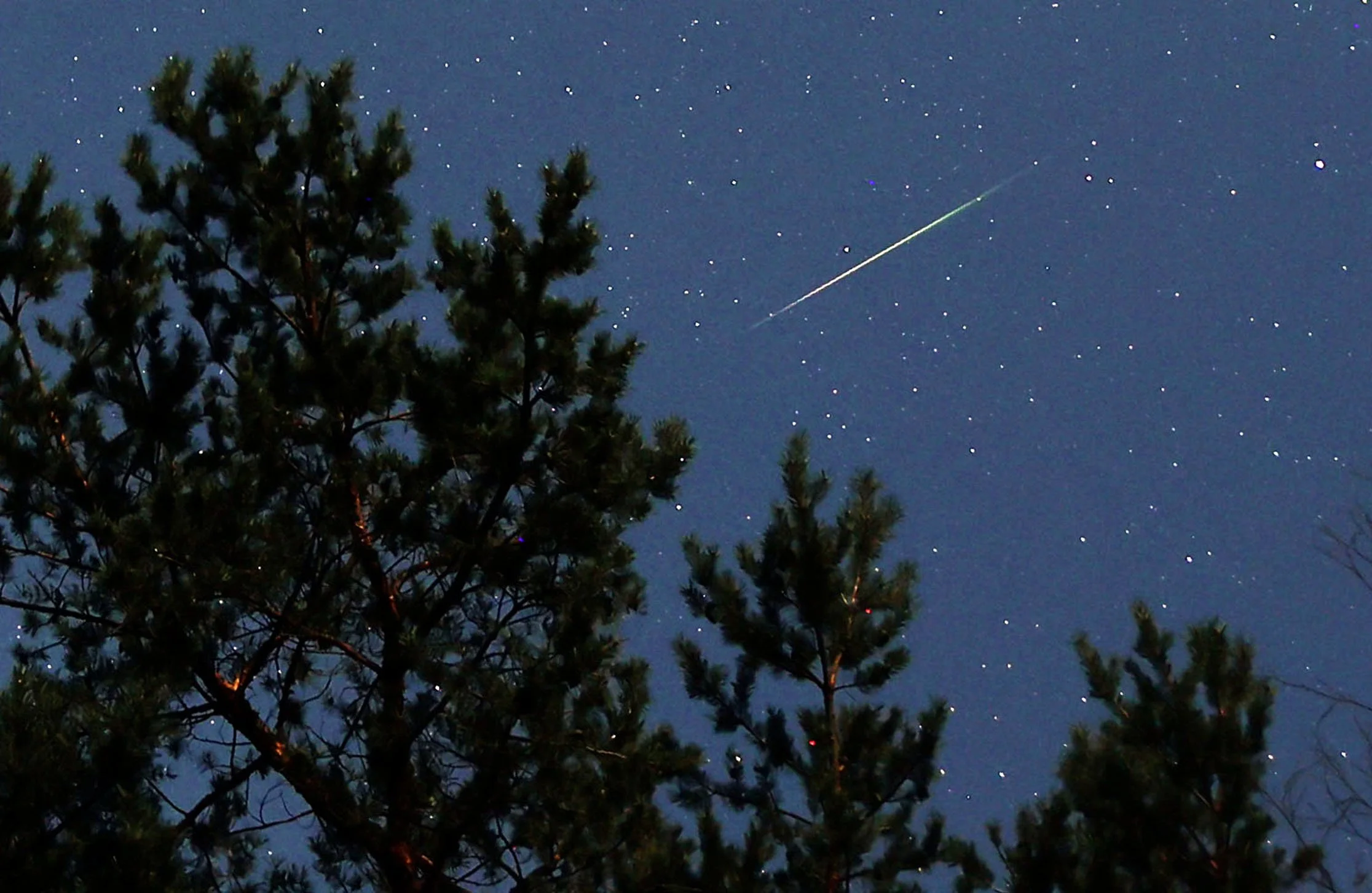
August 12–13 – Perseid meteor shower, one of the richest of the year, peaks Wednesday night-Thursday morning. No moon will mar the view. Roughly 80 meteors per hour may be visible from the countryside, but about half that from nearer a city. Viewing starts around 10 p.m. with the maximum number of meteors expected between midnight and dawn. Meteors will stream from Perseus below Cassiopeia’s W but flash all over the sky.
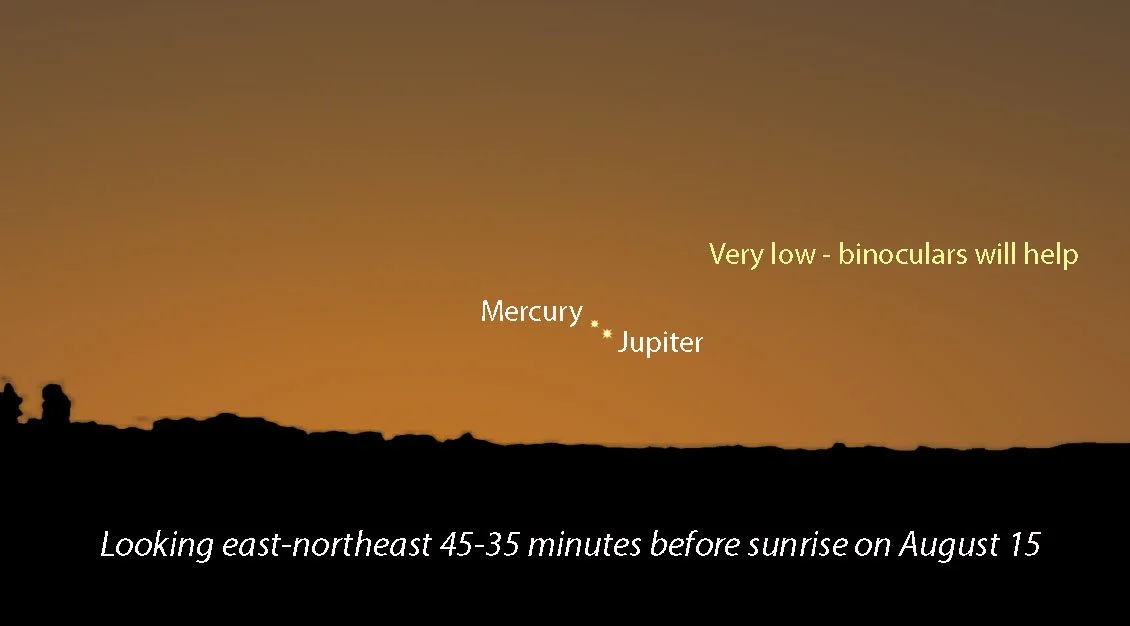
August 15 (a.m.) – Jupiter and Mercury in close conjunction just one-moon-diameter apart 45 minutes before sunrise low in the eastern sky.
August 15 – Thin moon slides under Venus at dusk low in the southwestern sky 30-40 minutes after sunset.
August 19–31 (a.m.) – The International Space Station makes 1-2 passes each morning around dawn. For a complete list of flyovers for your city, log in to Heavens-Above.com, select your location and then click the blue ISS link. Or download and install NASA’s Spot the Station app at the app store or Google Play.
August 19 – First quarter moon shines low in the south at sunset.
August 27–28 – Full Sturgeon Moon will undergo a deep partial eclipse tonight. Go to https://www.timeanddate.com/moon/ to find your local moonrise time. The partial eclipse begins at 9:34 p.m. Maximum eclipse occurs at 11:13 p.m., and the partial eclipse ends at 12:52 a.m.
August 30 – Waning gibbous moon shines above Saturn.

Bob King is an amateur astronomer, author, and passionate educator. He served as a photographer and photo editor at the Duluth News Tribune for 39 years and taught at the UMD planetarium. Bob’s work had a great impact on Voyageurs National Park. To achieve International Dark Sky Park certification, the park was required to host dark sky education events. Through the Night Sky Explorer webinars, the Conservancy was able to fulfill this component and help secure the certification for Voyageurs National Park. We can’t thank Bob King enough for sharing his talents and knowledge with the Conservancy community to support dark sky preservation.