
September 2025 Night Sky Explorer by Bob King
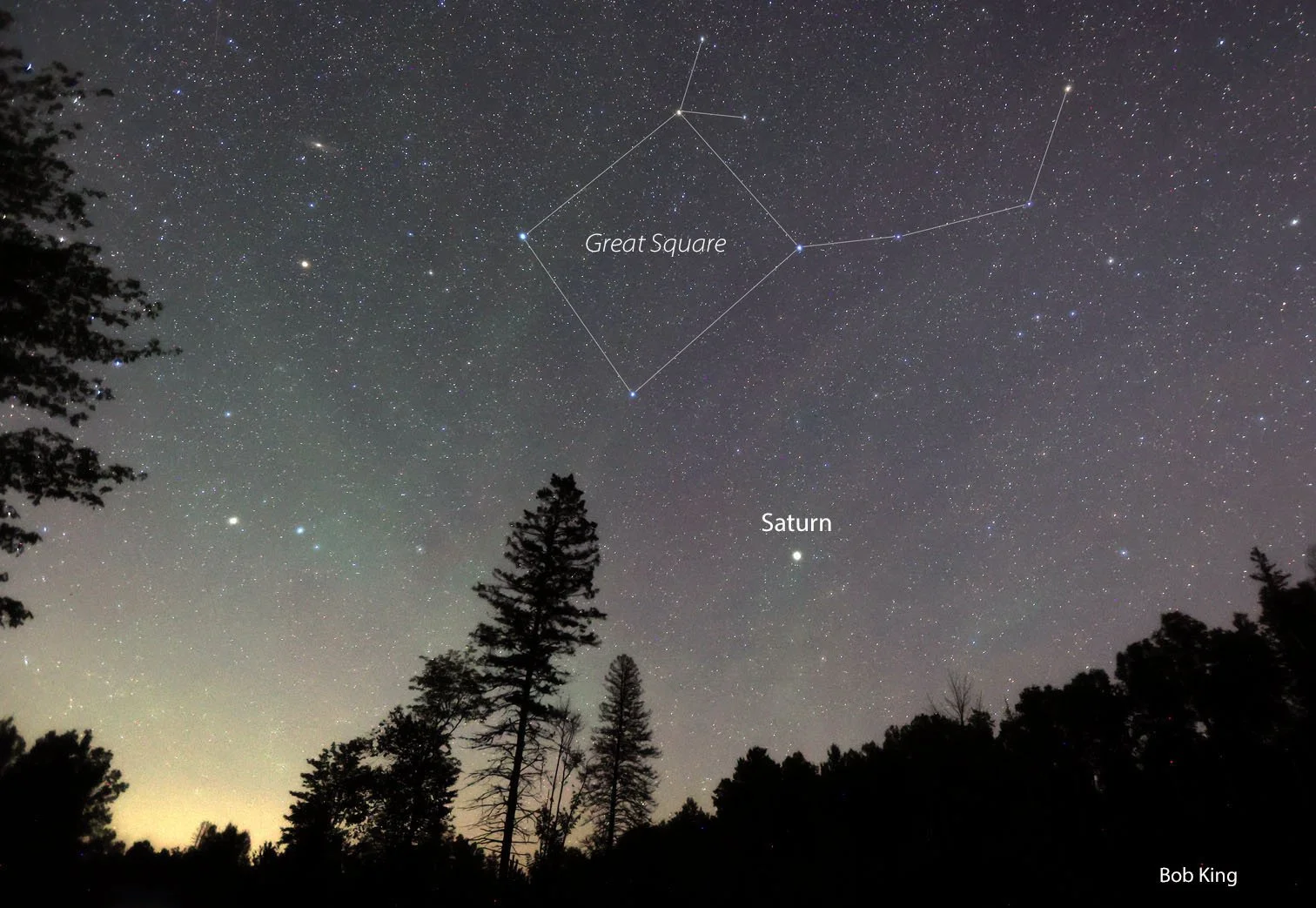
We welcome Saturn to the evening sky. On September 1, you’ll spot it coming up in the east in Pisces the Fish around 10 p.m. By month’s end, it’s in view by 8. On September 21 the Ring King reaches opposition, when it’s directly opposite the sun in the sky. From our perspective on Earth, it rises at sunset and remains visible all night until sunrise the next morning. If you have small telescope, take a look. Saturn’s rings are so narrowly tipped this month they resemble a toothpick stuck through an olive.
The must-see event is the double conjunction of the waning crescent moon, Regulus (Leo’s brightest star) and Venus at dawn on September 19. All three will scrunch together less than a degree apart! We also have a total lunar eclipse and partial solar eclipse this month, but neither will be visible from the Americas.
Curiously, September’s full moon won’t be the Harvest Moon, which is defined as the full moon closest to the fall equinox. Instead that honor goes to October’s moon this year. The Corn Moon will take its place. Despite the name change, we’ll still see similar effects, with successive moonrises around full moon spaced just 20 minutes apart instead of the usual 50 minutes.
Finally, the autumnal equinox occurs on September 22 at 1:19 p.m. Central Time. This is when the sun passes the midway point – called the celestial equator –between its greatest elevation at the summer solstice and when it sinks to its lowest point in the sky on the first day of winter.
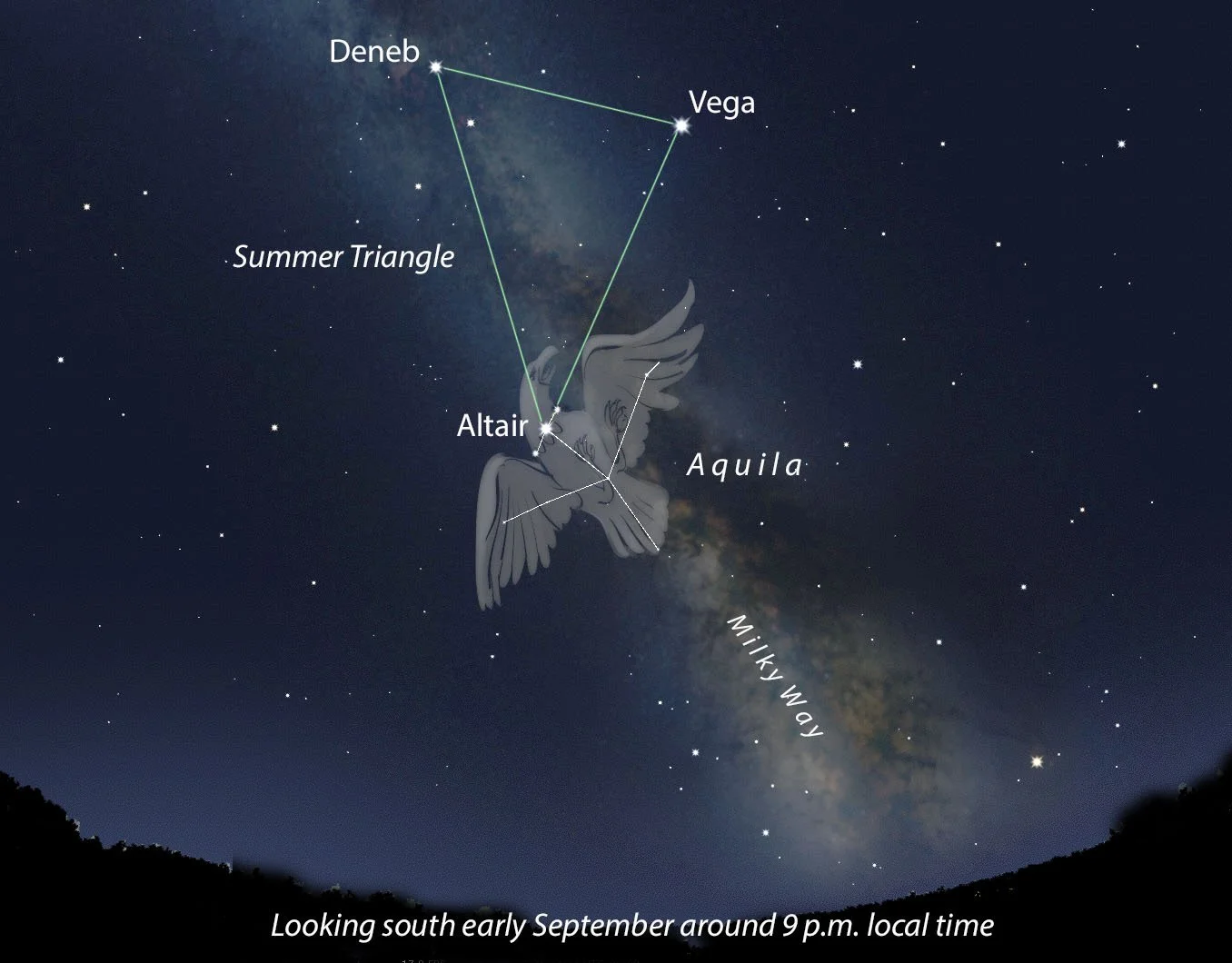
Our featured constellation is Aquila the Eagle. It stands midway up the southern sky as soon as it gets dark and hosts the bright star Altair (Arabic for “the flying bird”). Altair, along with Deneb in the Northern Cross and Vega in Lyra, outlines one of the biggest and brightest asterisms in the night sky, the Summer Triangle. In Greek mythology, Aquila was the thunderbird who carried and retrieved lightning bolts that Zeus used as weapons to vanquish monsters, intimidate his enemies and otherwise maintain order. Feel free to make your own associations with the eagle of the night.
Download the free Stellarium Mobile app for Android and iPhone to help you find and identify the current planets and constellations. Do a Google search, then install the app, set it in night mode (red screen) and point your phone skyward. For a free September sky map and calendar go to www.skymaps.com/downloads.htmlI also update on auroras and other sky events on Facebook at https://www.facebook.com/astrobobking/
Events (a.m. indicates the event happens in the morning sky):
September 1 – Venus shines just below the Beehive star cluster in Cancer at the start of dawn. Use binoculars, focus sharply on the planet, and you’ll spot the cluster a short distance above it in the same field of view.

September 7 – Full Corn Moon. Rises around local sunset and sets the next morning around sunrise. Although the eclipse won’t be visible in the Americas, you can watch a live feed at this link: https://www.virtualtelescope.eu/2025/08/18/the-7-sept-2025-total-lunar-eclipse-online-observation-7-sept-2025/ starting at 12:45 p.m. Central Time.
September 8 – 30 – The International Space Station makes nightly passes across the evening sky. For a complete list of flyovers for your city, log in to Heavens-Above.com, select your location and then click the blue ISS link. Or download and install NASA’s Spot the Station app at the app store or Google Play.
September 14 (a.m.) – Last quarter moon. The half-moon stands due south around the time of sunrise.
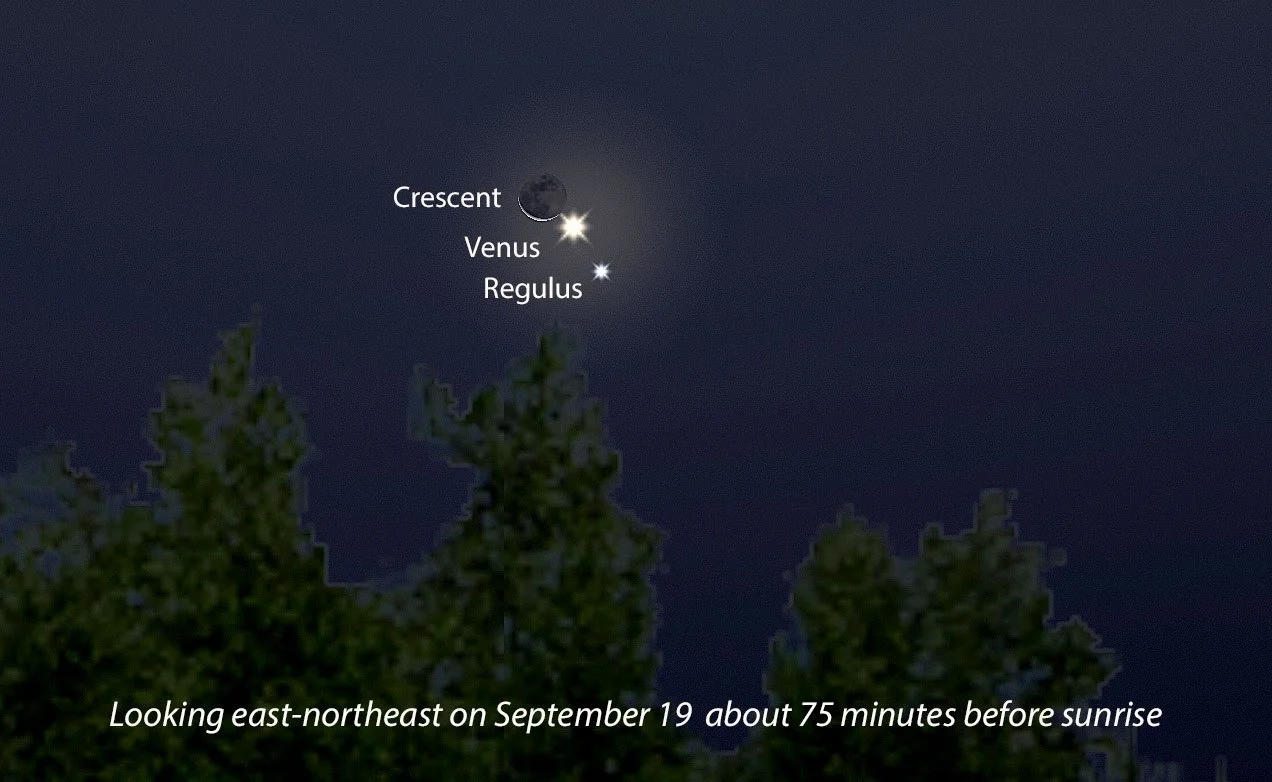
September 19 (a.m.) – Spectacular close conjunction of the waning moon, Regulus and Venus at dawn. Face east about 1.5 hours before local sunrise. You can see this with the unaided eye, but binoculars will enhance the view.

September 20−30 (a.m.) – Watch for the tapered cone of the zodiacal light tilting upward from the eastern horizon from 2 hours to 90 minutes before sunrise. It’s a tall cone of softly luminous dust spread across the plane of the solar system by comets, colliding asteroids and Martian dust storms and backlit by the sun. It resembles the Milky Way but has a distinctive “pointed finger” shape. Both Jupiter and Venus shine along the axis of the cone.

September 22 – Happy equinox! Autumn begins at 1:19 p.m. Central Time when the sun crosses the celestial equator, which marks the midway point between its summer pinnacle and winter minimum. Today it rise due east point and sets due west. Days and nights are nearly equal at 12 hours apiece.
September 21 – New Moon. The moon lies in the same direction as the sun and is invisible in the daytime sky. Today the moon will partially eclipse the sun from New Zealand and Antarctica. You can watch a live feed at https://www.timeanddate.com/live/eclipse-solar-2025-september-21
September 21 – Saturn at opposition. It lines up with the Earth on the same side of the sun, so it’s closest to us for the year. That means it’s also brightest and appears largest when viewed through a telescope. You’ll find the planet in the southeastern sky below the Great Square asterism of Pegasus.
September 29 – First quarter moon. In this phase, the half-moon stands high in the southern sky at sunset.
September is also a good month keep your eyes peeled for auroras. Visit my Astro Bob page on Facebook at www.facebook.com/astrobobking for timely reports and forecasts.
Clear skies! --- Bob
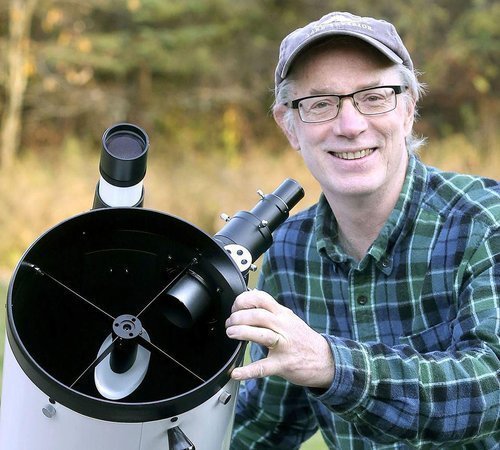
Bob King is an amateur astronomer, author, and passionate educator. He served as a photographer and photo editor at the Duluth News Tribune for 39 years and taught at the UMD planetarium. Bob’s work had a great impact on Voyageurs National Park. To achieve International Dark Sky Park certification, the park was required to host dark sky education events. Through the Night Sky Explorer webinars, the Conservancy was able to fulfill this component and help secure the certification for Voyageurs National Park. We can’t thank Bob King enough for sharing his talents and knowledge with the Conservancy community to support dark sky preservation.
