
#29: Harry Oveson
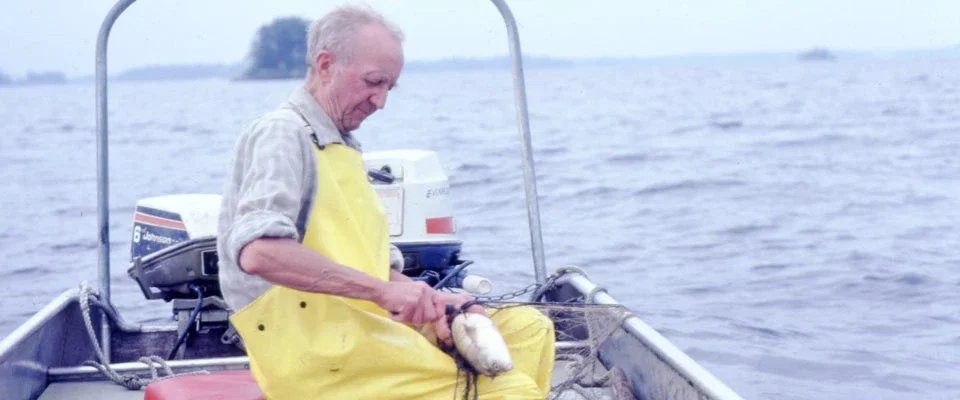
Harry Oveson on Rainy Lake. Credit: NPS
Harry Oveson was born in 1906 in Roseau, Minnesota, and moved with his family to International Falls in 1921. There, he worked various jobs, including helping in his father’s bait and tackle shop and spending time at the local lumber mill. When the Great Depression hit, Harry began hopping trains and traveling across the country in search of work and adventure. During World War II, he joined the U.S. Army and was stationed in Alaska, but by 1959, he had returned to northern Minnesota and settled on the shores of Rainy Lake, where he built what became known as Oveson’s Fish Camp.
Life at the fish camp started early. Harry would wake up before sunrise and often watch the day break through his front window before heading out on his 16-foot Alumacraft boat. By six o’clock in the morning, he was on the water lifting his nets, pulling in fish, and resetting them for the next day’s catch. He usually returned to shore by midmorning to clean, sort, and pack the fish on ice. A successful day could yield around 300 pounds of whitefish and 50 pounds of walleye. Though he lived alone, Harry was rarely lonely – his dog Goofball and the many birds around the lake kept him company. He also enjoyed reading and stargazing in the quiet evenings of the Northwoods.
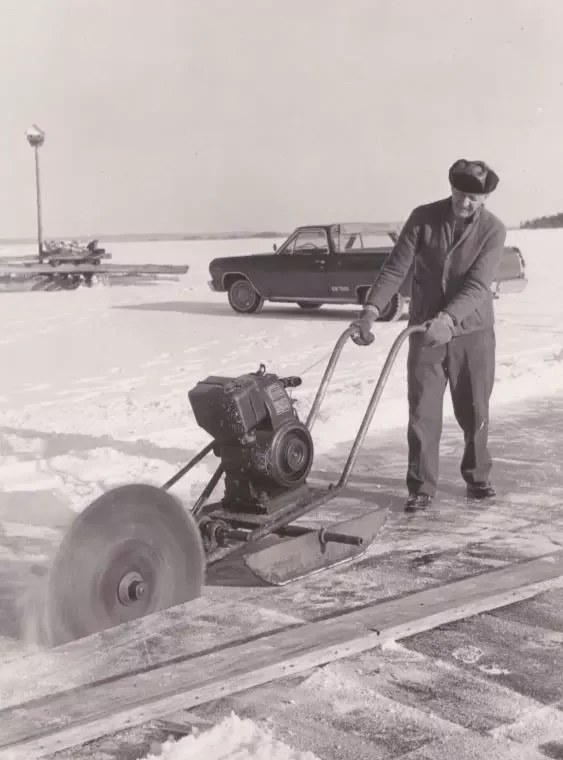
Harry Oveson harvesting ice on Rainy Lake. Credit: NPS
A major part of Harry’s operation depended on ice. Every other January, he made the long trip from his winter home in Arizona to Rainy Lake to harvest enough ice to last through the fishing season. Cutting and storing the ice was a demanding task that took several hours and the help of friends. Using saws, ropes, pulleys, and ice hooks, they cut large blocks of ice from the lake and packed them tightly inside an icehouse that measured about 16 by 10 feet and six feet high. The blocks were insulated with cedar shavings and sawdust, which helped keep them frozen well into the next year, so well in fact, that his ice often lasted two full summers.
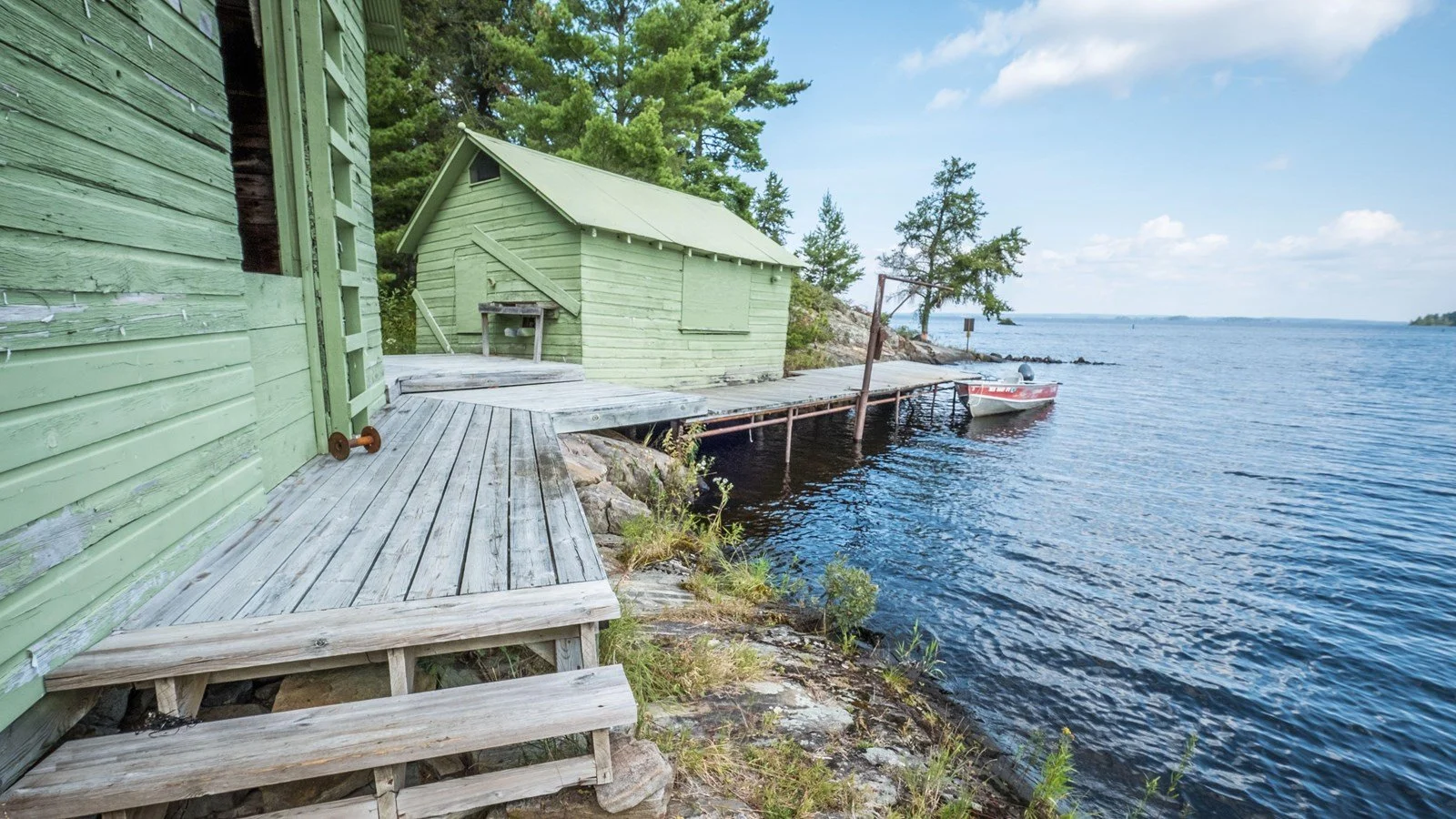
Harry Oveson Fish Camp today. Credit: Linda Webster
When it came time to ship his catch, Harry would crush several of the ice blocks and pack the fish for transport. He made regular trips into International Falls, sometimes every other day, to deliver fresh fish. Occasionally, a supply boat, known as a “fish boat”, would stop by his camp to pick up the catch and drop off mail, groceries, or fuel. His fish were sold locally and even shipped as far as Chicago.
Harry Oveson was among the last commercial fishermen working on Rainy Lake. As sport fishing became more popular, commercial fishing declined. In 1985, the State of Minnesota ended the commercial walleye industry on the lake, compensating Harry and two other remaining fishermen for giving up their licenses. After closing his camp, Harry retired to Arizona, where he passed away in 1990 at the age of 84.
Today, Harry’s legacy lives on in Voyageurs National Park. Oveson’s Fish Camp, once a hardworking outpost on the shore of Rainy Lake, now remains preserved as an official visitor destination within the park. Visitors can explore the site, learn about Harry’s life on the water, and glimpse a way of living that helped shape the cultural and industrial history of what is now Voyageurs National Park.
Check out the full list of our 50 legacies!
This year, we’re celebrating 50 years of Voyageurs National Park by sharing 50 inspiring stories of the people who shaped its legacy. Years, 50 Legacies is a yearlong storytelling series highlighting individuals whose lives are woven into the fabric of the park – whether through conservation work, cultural traditions, recreation, research, or personal connection.
Raise a canteen and celebrate this historic milestone with us at our 50th anniversary website. Don't forget to subscribe to our newsletter for more inspiring stories and updates!
