
August 2025 Night Sky Explorer by Bob King
Yes! We finally have a bright evening planet. Early in the month, Saturn rises in the southeastern sky before midnight and gradually inches higher as the nights tick by. At dawn, Venus closes in on Jupiter, leading up to a spectacular close conjunction on the morning of August 12th. Since the annual Perseid meteor shower will peaking at nearly the same time, you can get up before dawn to watch the shower and top it off with the conjunction.
On a moonless night we might see 50-80 Perseids per hour from a dark, rural sky on the night of August 12-13. Unfortunately, the bright waning gibbous moon will compromise the show, reducing meteor totals by about half. Moonlight or not, we’ll still see meteors.
You can either watch early, from 10 till midnight, or get up in the morning hours (when numbers are typically higher) and watch until dawn. If it’s cloudy, go out the night before or after, since the shower still has life in it even off-peak. Ditto for Jupiter and Venus. They’ll be closest on August 12th but still make a tight pair in the nights leading up and following the conjunction.
Finally, Mercury makes one of its best morning appearances of the year during the second half of August. Watch for the planet low in the eastern sky 45 minutes to an hour before sunrise.

Our featured constellation is Cygnus the Swan. You might know it better as the Northern Cross. Cygnus stands nearly overhead in the southern sky around 10:30 p.m., so it requires a little neck-bending. Better yet, just lie back on the grass and look up. One of the brightest segments of the Milky Way, the Cygnus Star Cloud, occupies the middle of the cross.
Cygnus comes to us from ancient Greek mythology. The king of the Greek gods, Zeus, assumed the form of a swan so he could pursue the nymph, Nemesis. Deneb represents the bird’s tail. At some 2,600 light-years from Earth, it’s one of the most distant bright stars visible with the eye. Opposite Deneb you’ll find the swan’s head, Albireo, one of the finest double stars in the entire sky. Seen as a cross, Deneb stands at its head and Albireo at the foot.
Download the free Stellarium Mobile app for Android and iPhone to help you find and identify the current planets and constellations. Do a Google search, then install the app, set it in night mode (red screen) and point your phone skyward. For a free July sky map and calendar go to www.skymaps.com/downloads.html I also update on auroras and other sky events on Facebook at https://www.facebook.com/astrobobking/
Events (a.m. indicates the event happens in the morning sky):
August 1 – First quarter moon. At this phase, the half-moon stands high in the southern sky at sunset.
August 3 – Waxing gibbous moon shines just below Antares, the bright, red-orange “heart” of Scorpius.
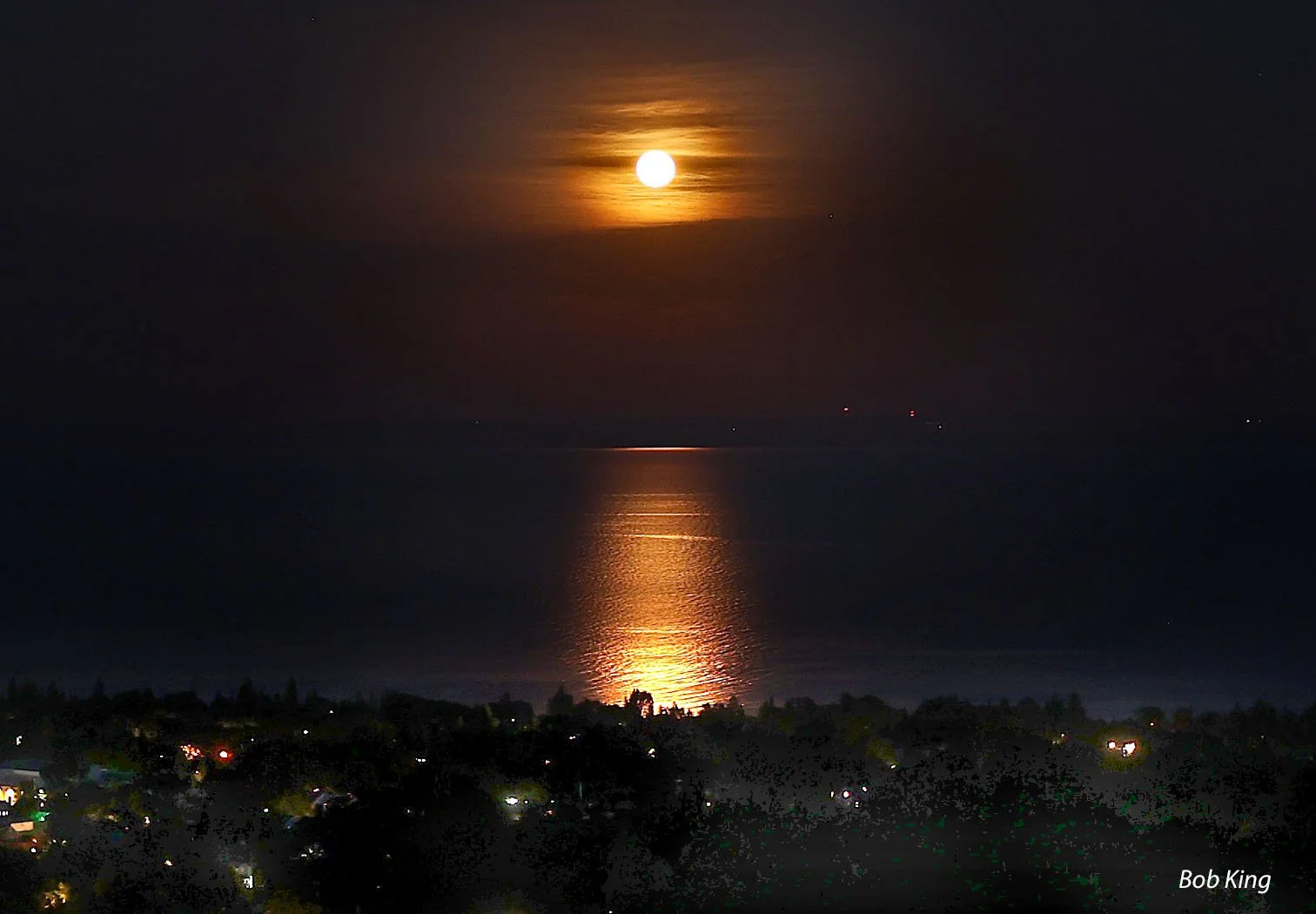
August 9 – Full Sturgeon Moon. Rises around local sunset and sets the next morning around sunrise. Named for the ideal time to catch sturgeon in the Great Lakes. Also known as the Corn Moon.
August 11-12 – Waning gibbous moon shines to the upper right of Saturn. The two rise in the southeastern sky around 11 p.m. local time.
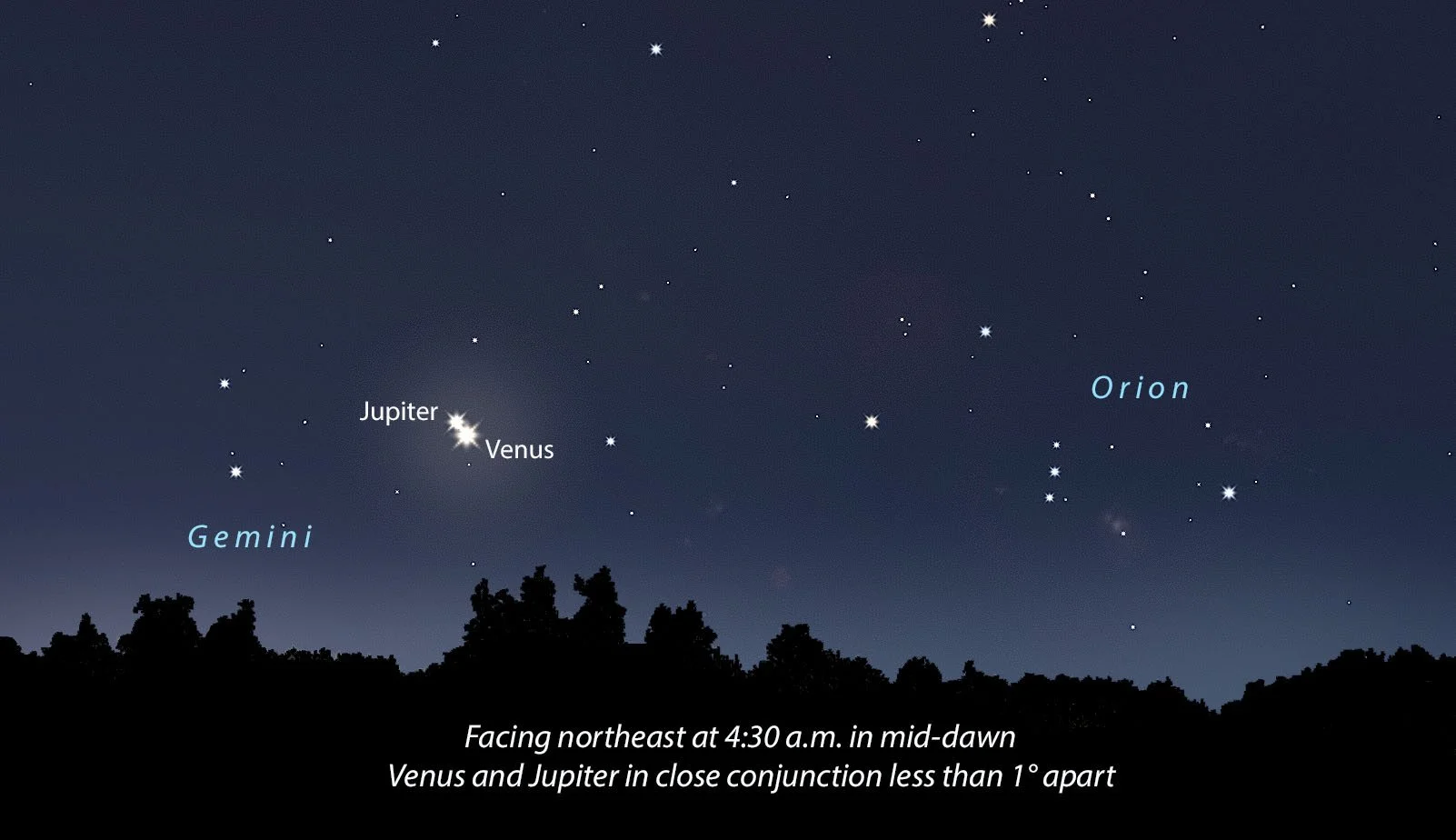
August 12 (a.m.) – Spectacular, close conjunction of Jupiter and Venus at dawn in the northeastern sky. The two brightest planets will be less than 1 degree apart. See them best from 2 hours to 1 hour before local sunrise.
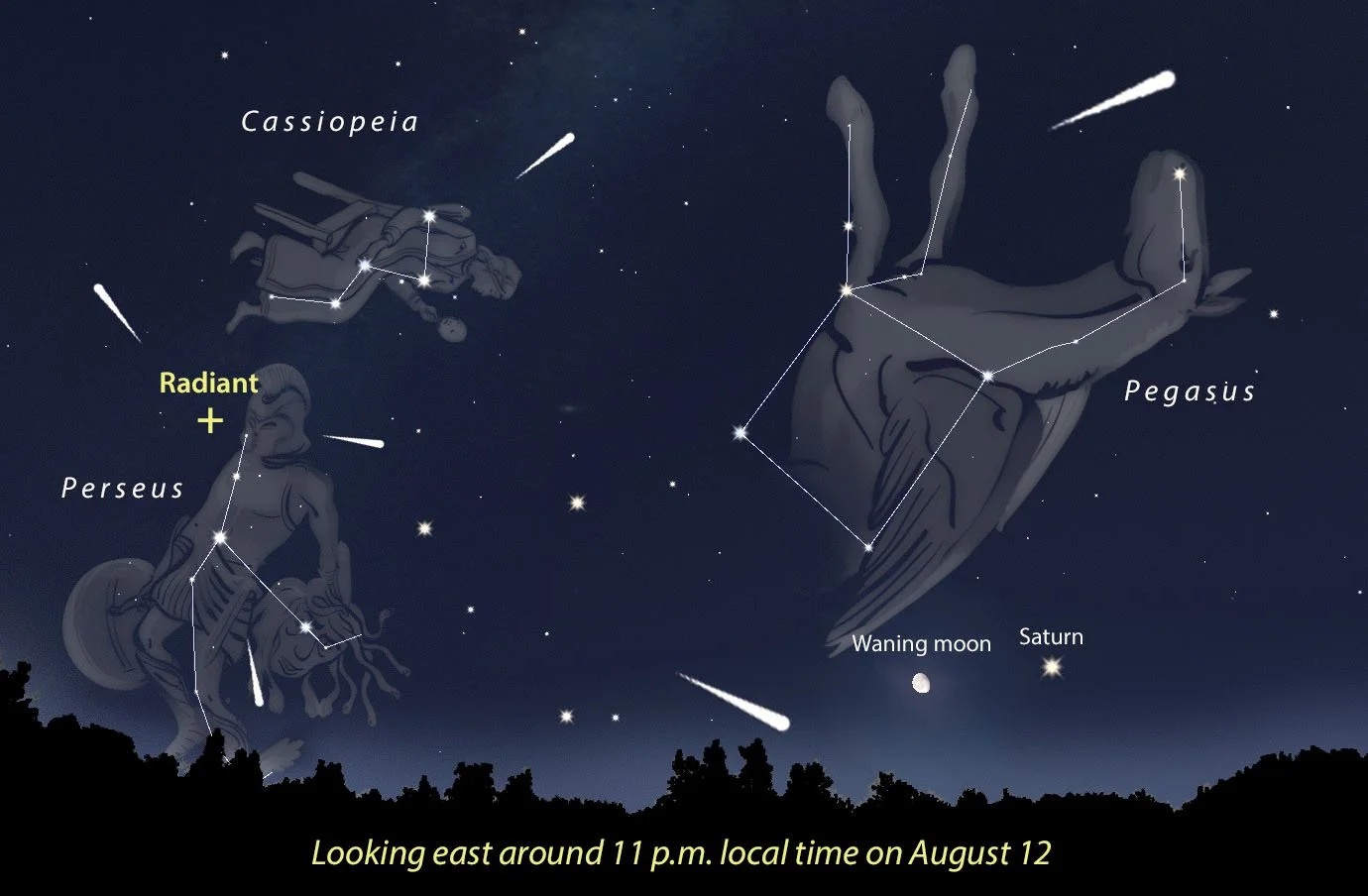
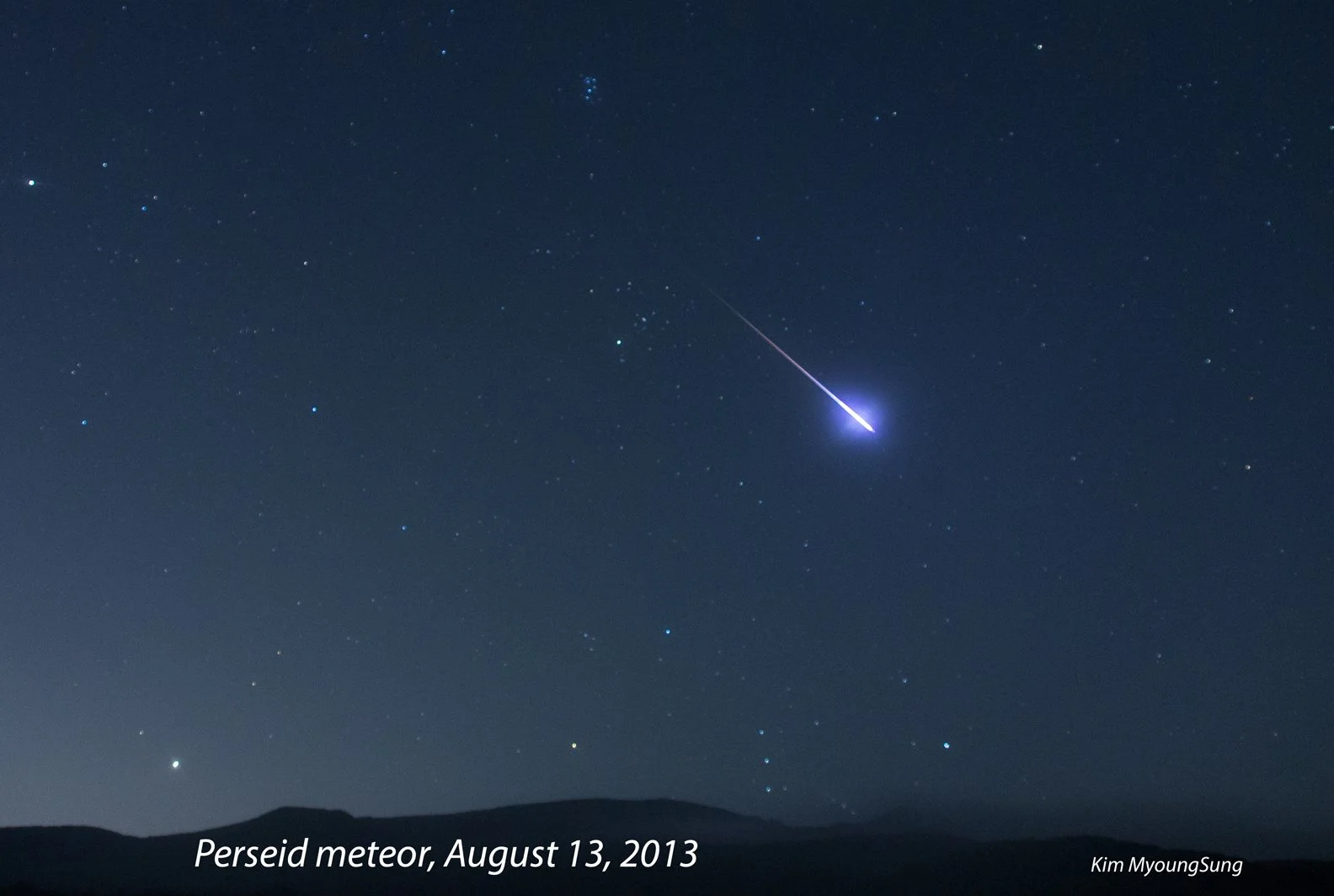
August 12-13 – Peak of the annual Perseid meteor shower. Perseids are fragments shed by the comet 109P/Swift-Tuttle. Every August, Earth crosses the comet’s path. As we plow through, bits and pieces strike the atmosphere at high speed and flare as meteors. No special equipment needed – just a comfortable lounge chair.
August 15-30 (a.m.) – Watch for Mercury to put in a fine appearance low in the northeastern sky 45 minutes to an hour before sunrise. Keep binoculars handy.
August 16 (a.m.) – Last quarter moon. The half-moon stands due south around the time of sunrise.
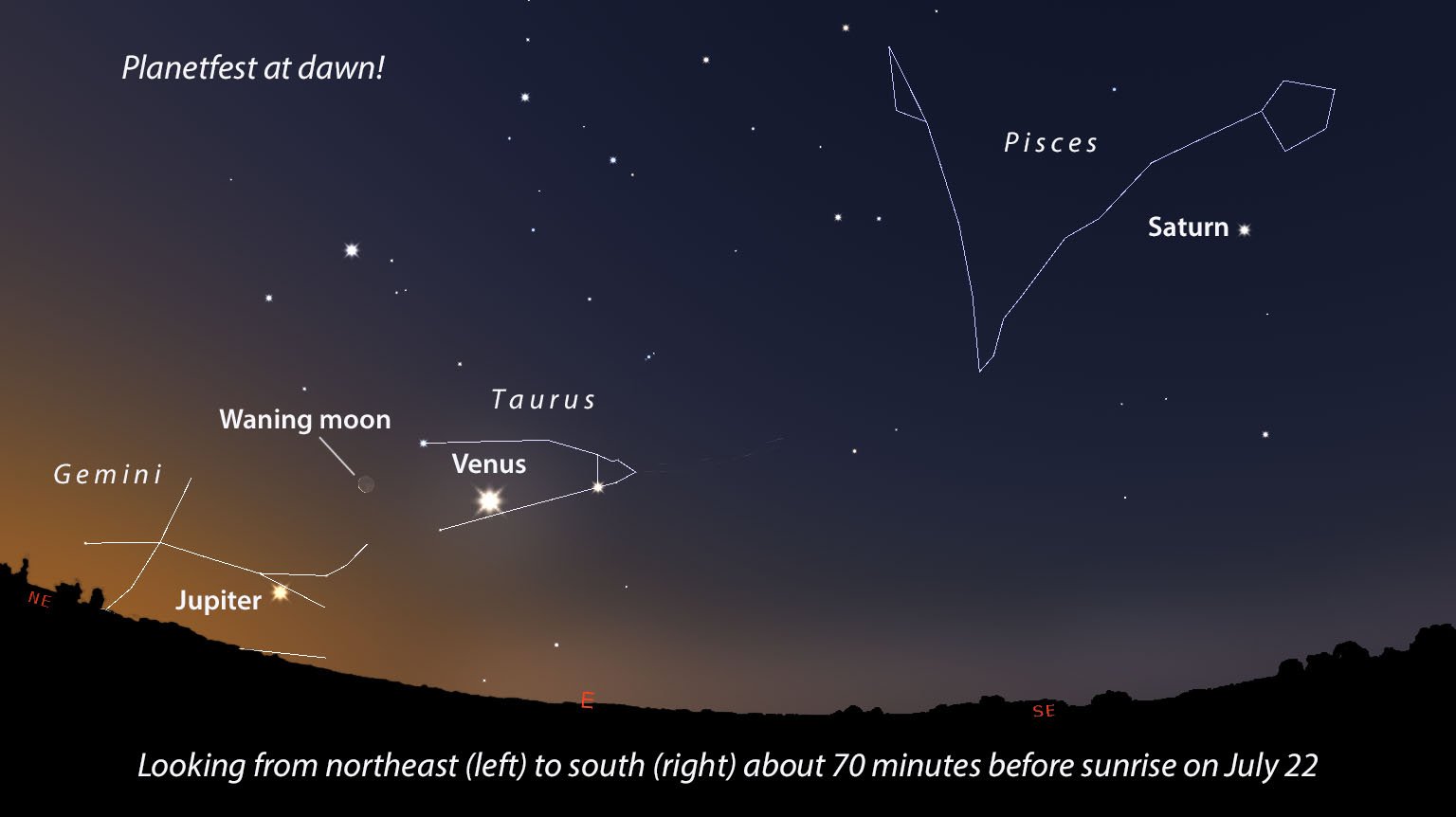
August 19 (a.m.) – Very thin lunar crescent forms an arc with Venus and Jupiter in the northeastern sky 90 minutes to an hour before sunrise. The following morning (Aug. 20), the trio will gather into a compact isosceles triangle.
August 20-31 (a.m.) – The International Space Station makes passes across the dawn sky. For a complete list of flyovers for your city, log in to Heavens-Above.com, select your location and then click the blue ISS link. Or download and install NASA’s Spot the Station app at the app store or Google Play.
August 21 – Very thin moon hovers a little more than 4 degrees above the planet Mercury an hour before sunrise low in the northeastern sky. If you have any trouble finding the planet, use binoculars. Both will fit in the same field of view.
August 26 – Crescent moon returns to view at dusk very low in the western sky 30 minutes after local sunset.
August 23 – New Moon. The moon lies in the same direction as the sun and is invisible in the daytime sky.
August 31 – First quarter moon – the month’s second! In this phase, the half-moon stands high in the southern sky at sunset.
Hoping your night skies are clear! - Bob

Bob King is an amateur astronomer, author, and passionate educator. He served as a photographer and photo editor at the Duluth News Tribune for 39 years and taught at the UMD planetarium. Bob’s work had a great impact on Voyageurs National Park. To achieve International Dark Sky Park certification, the park was required to host dark sky education events. Through the Night Sky Explorer webinars, the Conservancy was able to fulfill this component and help secure the certification for Voyageurs National Park. We can’t thank Bob King enough for sharing his talents and knowledge with the Conservancy community to support dark sky preservation.
